Plan a repeatable mortise-and-tenon production workflow
Nesto tenoning solutions cover mortise opening, CNC male-tenon production and combined end cutting, moulding and drilling. Select the process around the joint geometry, part orientation and repeat quantity.
Start with the joint and workpiece
Joint type
Define whether the process requires a mortise, a male tenon or a combined end-preparation operation.
Part handling
Review section size, length, orientation, clamping reference and how parts move between operations.
Repeatability
Set tolerance, batch size, model-change frequency and the operator rhythm expected from the cell.
Toplam 3 sonuç gösteriliyor
Tenoning machine model guide
Each solution addresses a different stage of the joint. Compare the actual joint drawing and part flow before selecting the machine.
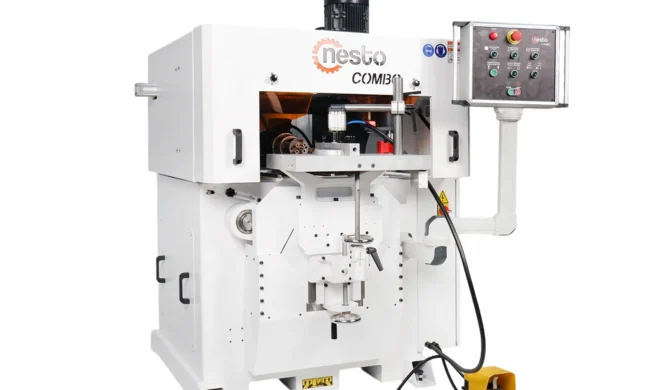
Combo Pneumatic End Cut-off, Moulding and Boring Machine
Pneumatic solution combining end cutting, moulding and drilling in one workstation.
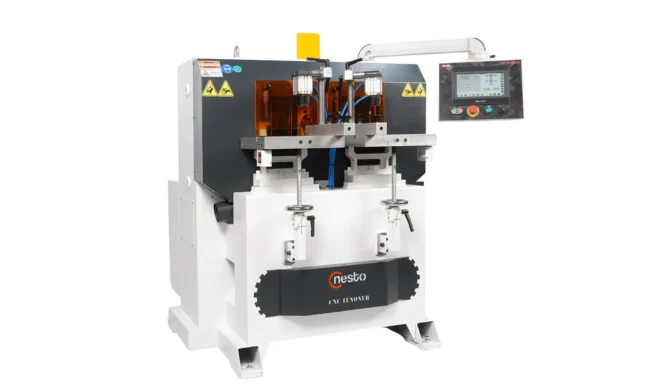
View productCNC Tenoner Machine
Twin-table CNC solution for repeatable male-tenon production in furniture and joinery parts.
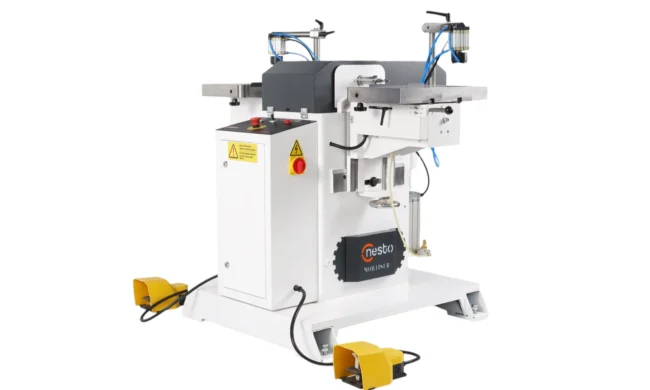
View productMortiser Machine
Machine for mortise-opening applications in solid-wood furniture joints.
View productMortise and tenon machine questions
What is the difference between a mortiser and a CNC tenoner?
A mortiser creates the receiving cavity of the joint. A tenoner forms the projecting male tenon. Many furniture components require both processes, which should be planned around the same joint drawing.
When is a combined end-cutting, moulding and boring machine useful?
It is useful when end preparation, shaping and drilling must be consolidated at one workstation for repeatable furniture or joinery parts. Suitability depends on the part and operation sequence.
Which sample data should be supplied?
Share the joint drawing, workpiece dimensions, wood type, tolerance, required operations, batch size and target cycle. A physical sample can help verify clamping and tool access.