
Dual-table mortise and groove production
Mortiser Machine
Create repeatable furniture joints with two adjustable workstations
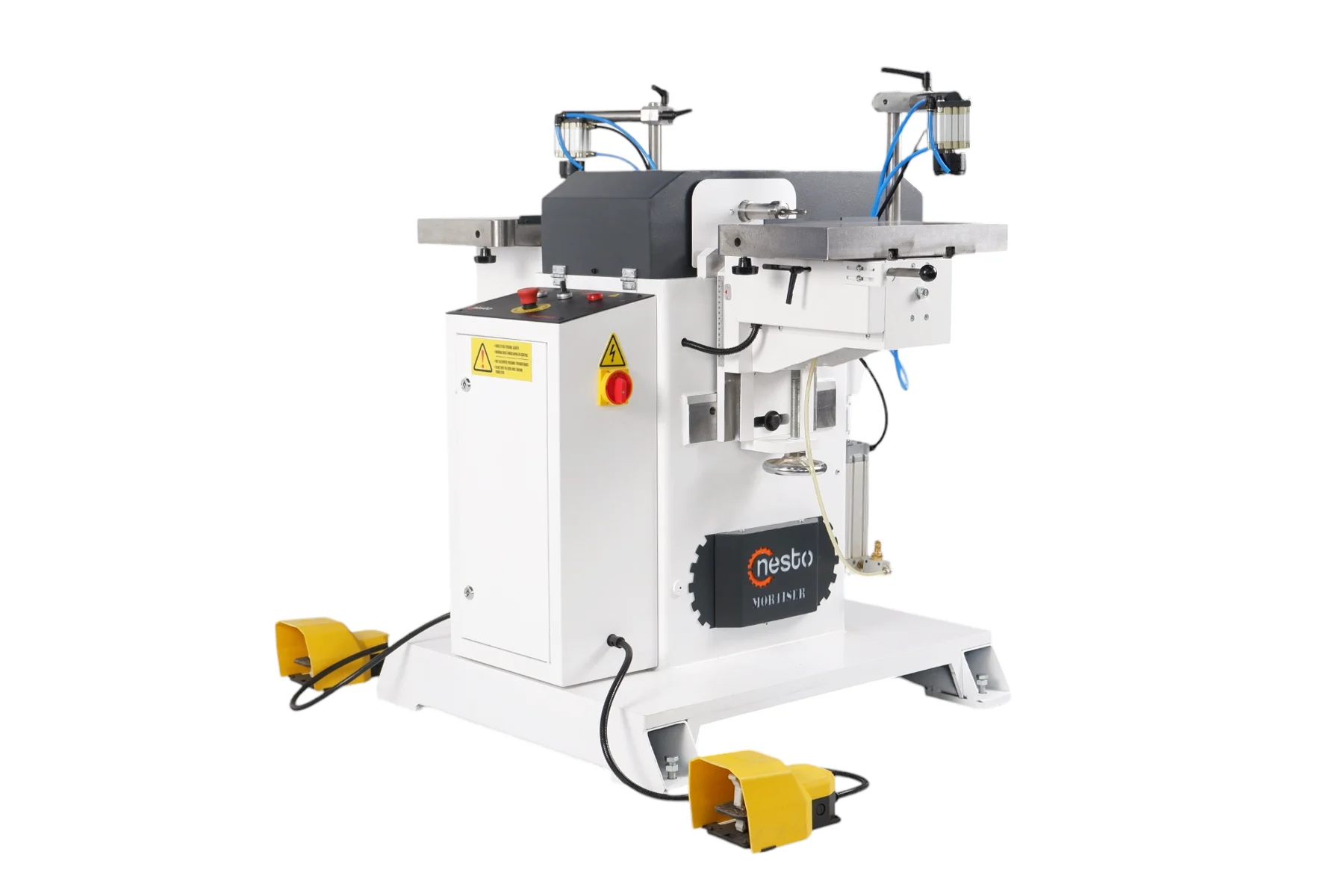
Two worktables, pneumatic top clamps and angle and height references support consistent mortises and grooves in solid-wood furniture parts.
- Two independently prepared worktables
- Pneumatic clamping and foot-pedal cycle control
- Compact 1,365 × 1,400 × 1,500 mm machine body
Add the part drawing, wood species, section, mortise dimensions, required angle and daily quantity to the quote form.
General Features and Production Capabilities

Compact dual-table mortise production
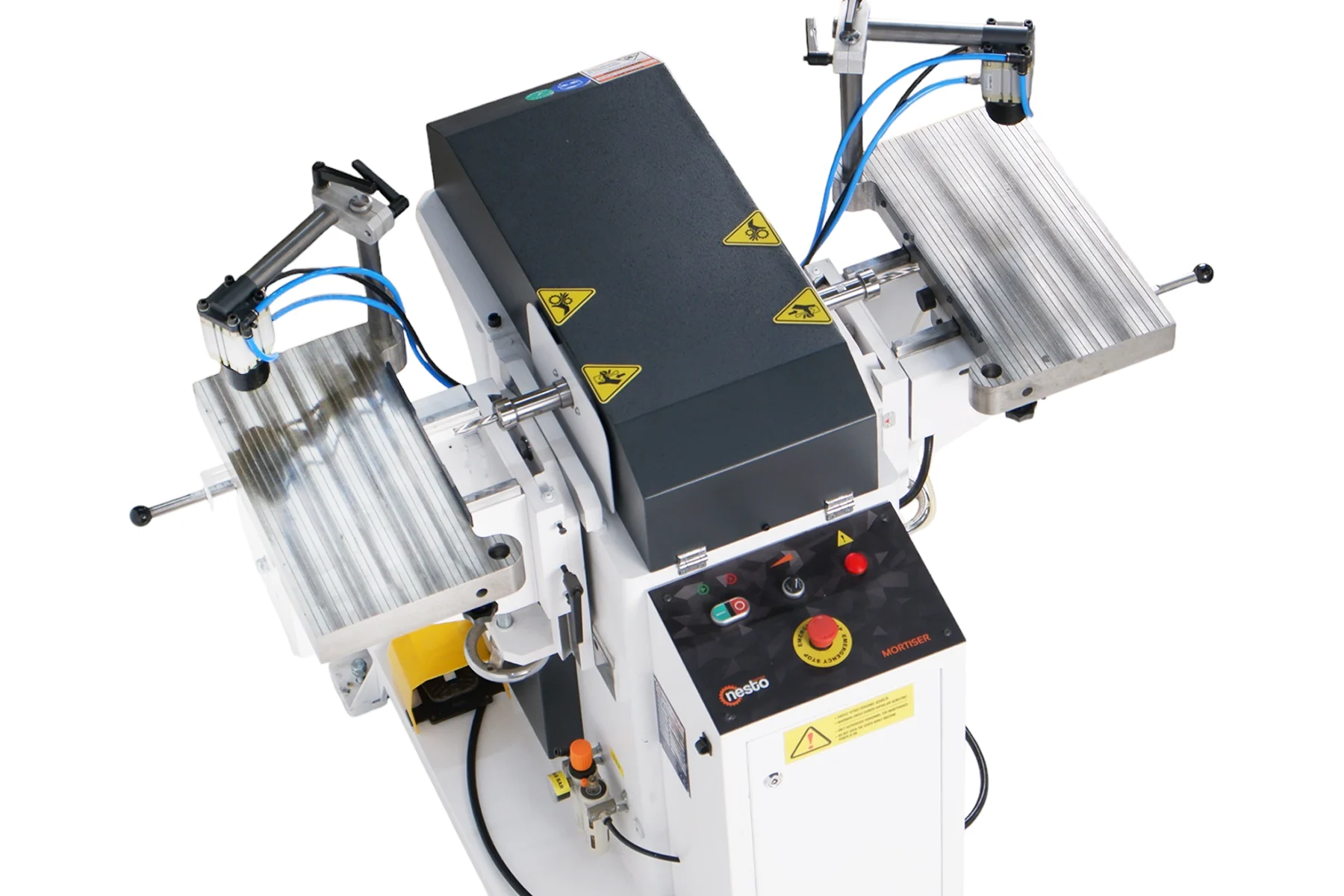
The Mortiser Machine produces repeatable mortises and grooves for furniture and joinery parts. Its compact floor-standing body brings two workstations, clamping and cycle control together around one protected machining unit.

Two-table production flow
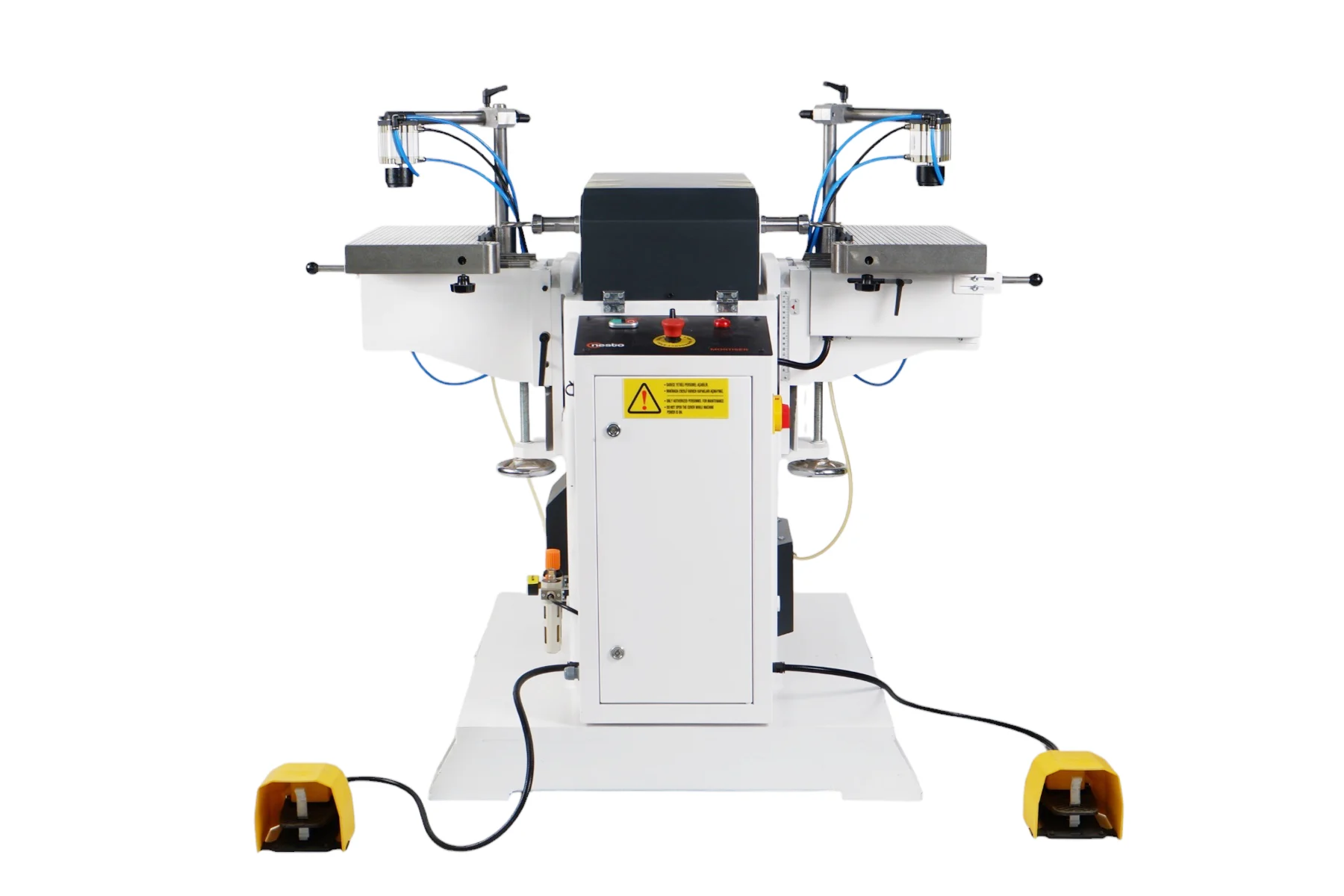
The two tables can be prepared for the same part or for different operations. While one side is being set, the other side can remain ready for the next cycle, helping reduce handling time.

Pneumatic workpiece holding
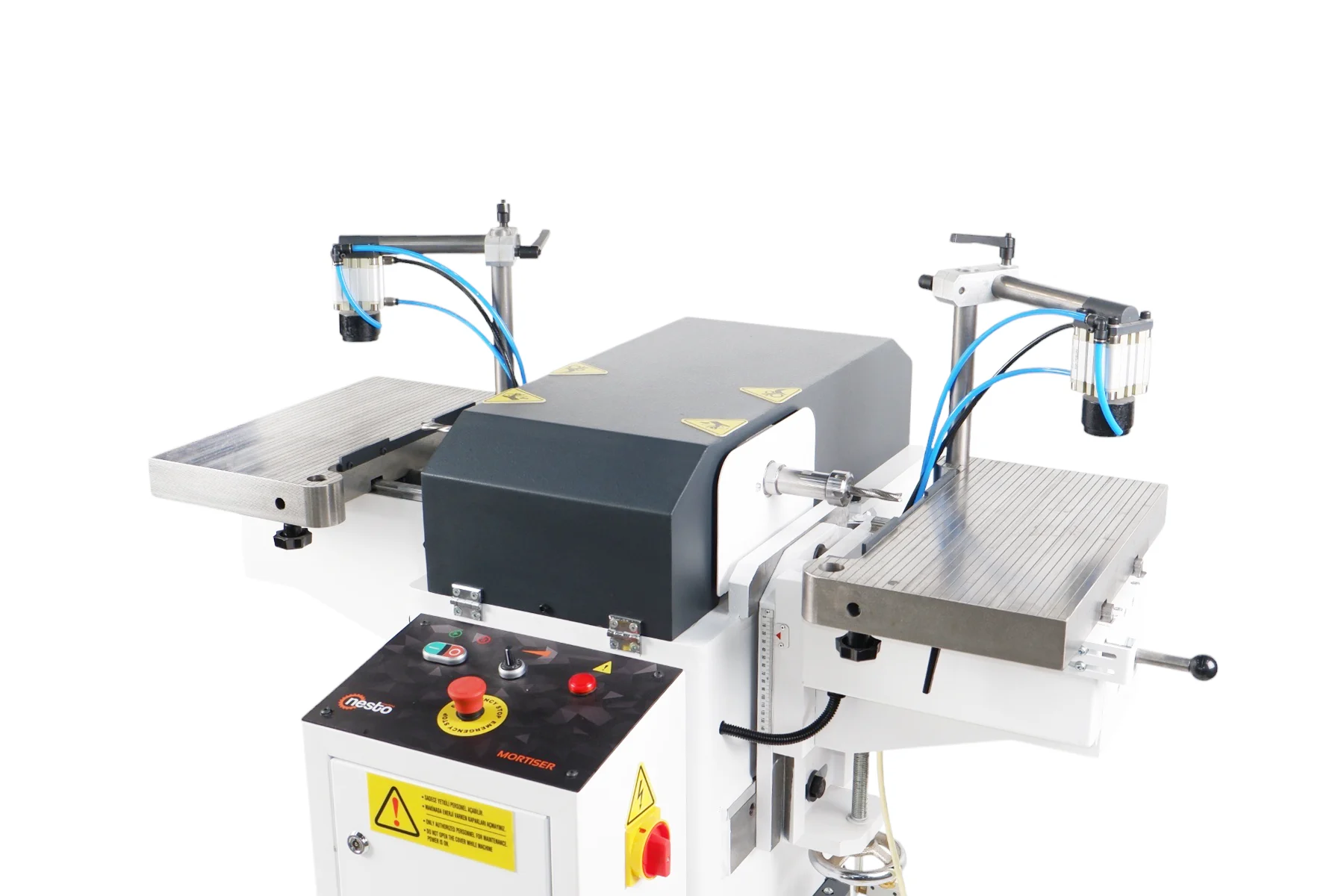
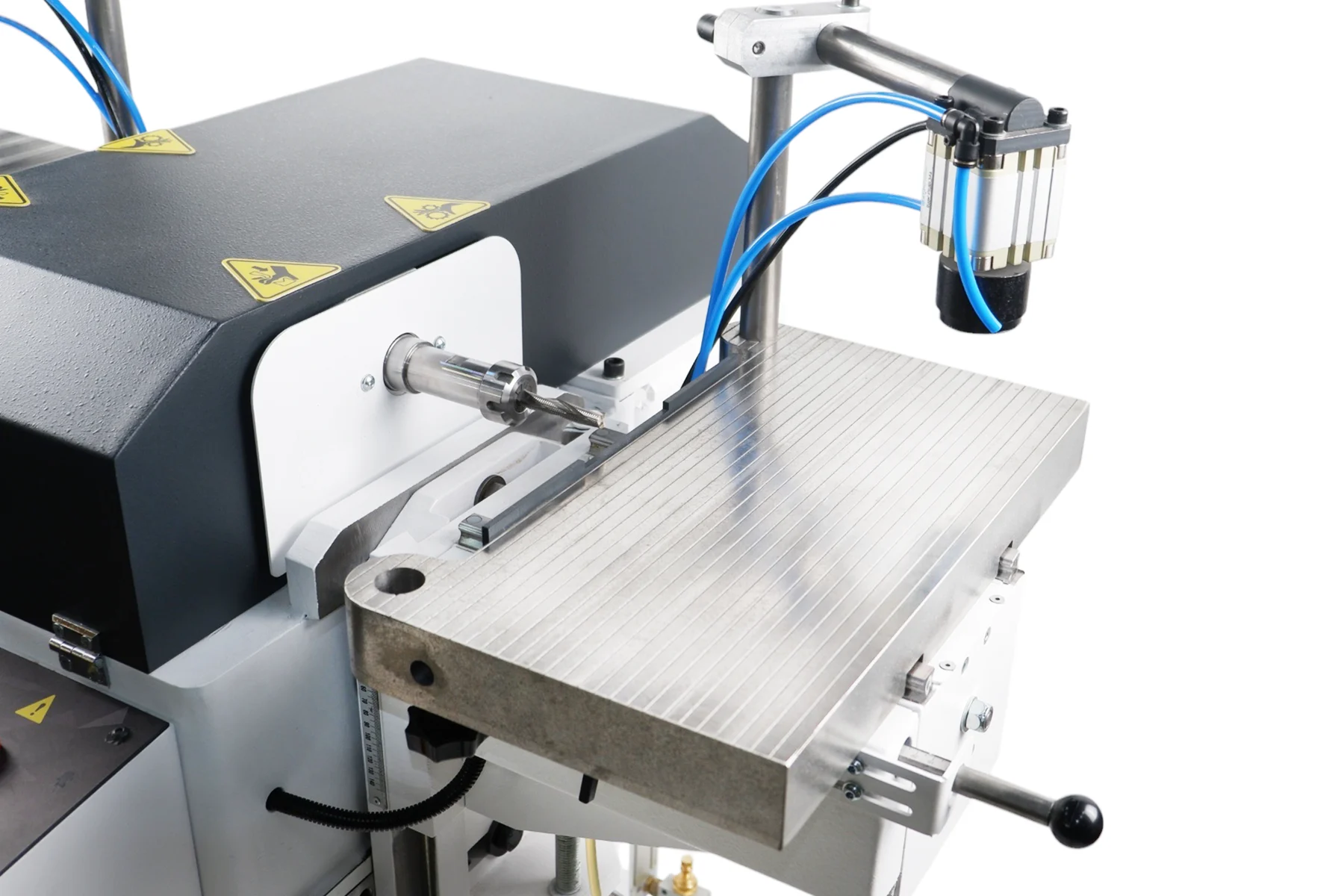
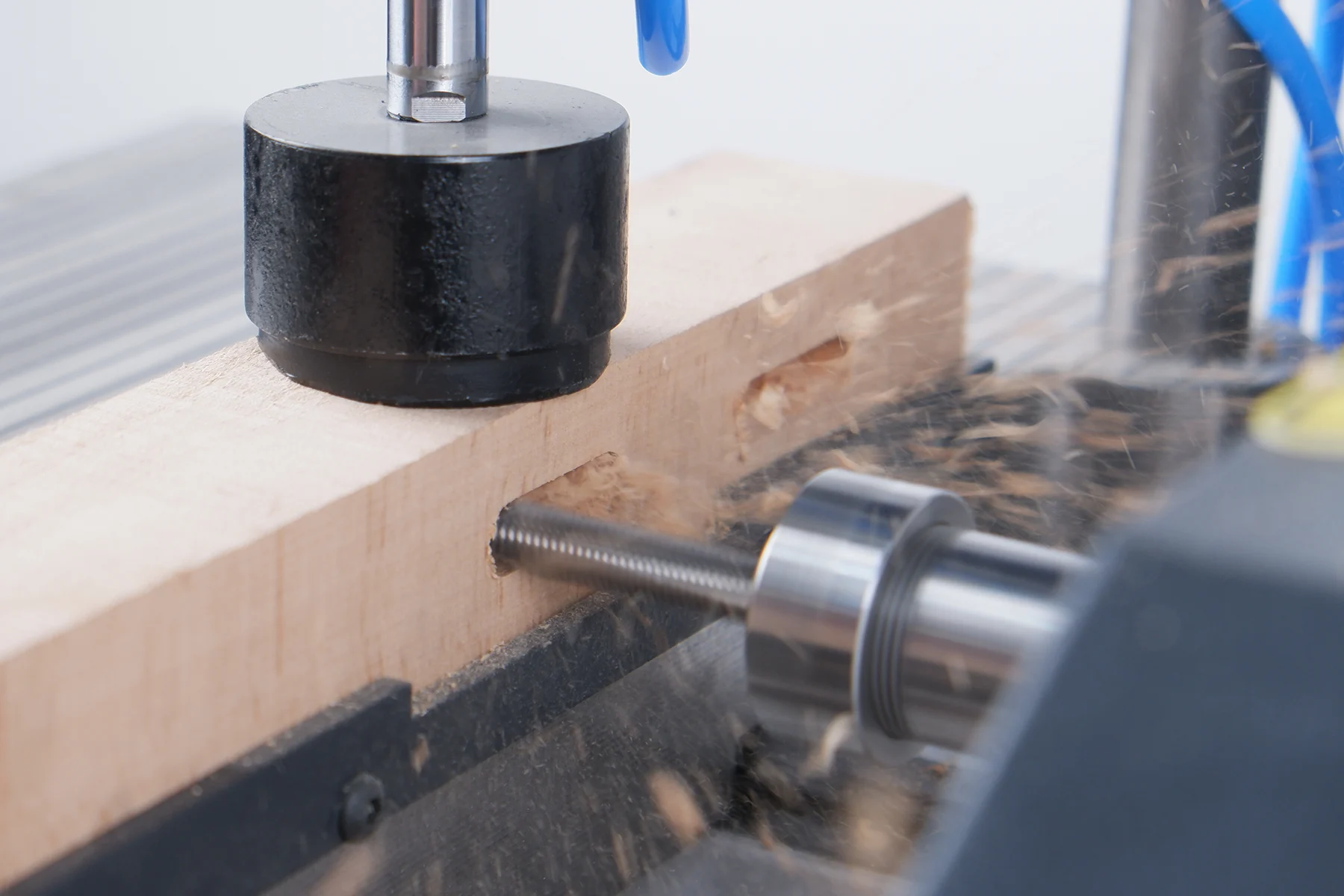
Pneumatic top clamps hold the component against the table during machining. The open table layout keeps the contact surfaces visible while the part is positioned.

Angle-adjustable worktables
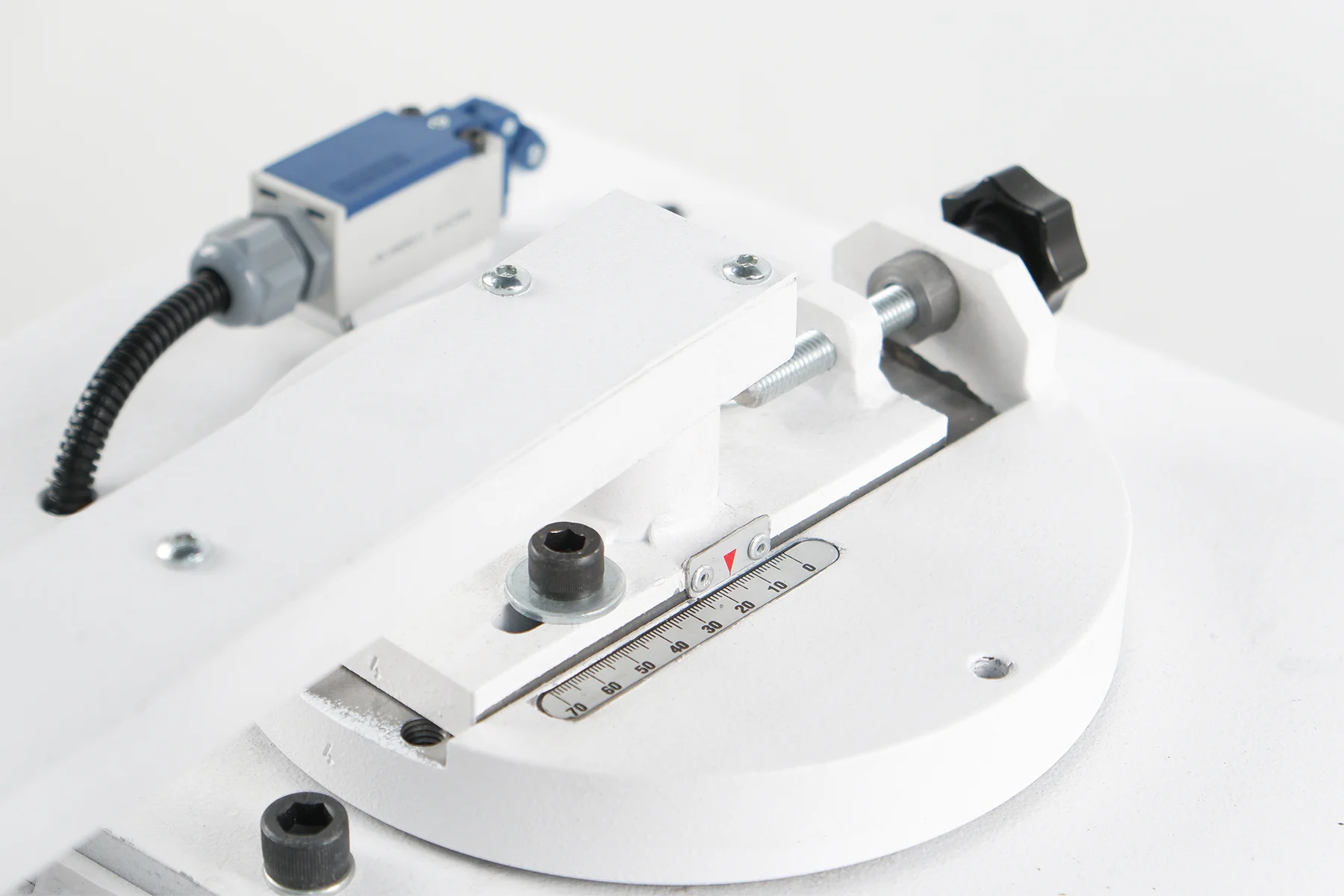
The table angle can be referenced on the graduated adjustment plate, supporting consistent positioning for angled furniture and joinery components.

Height reference adjustment
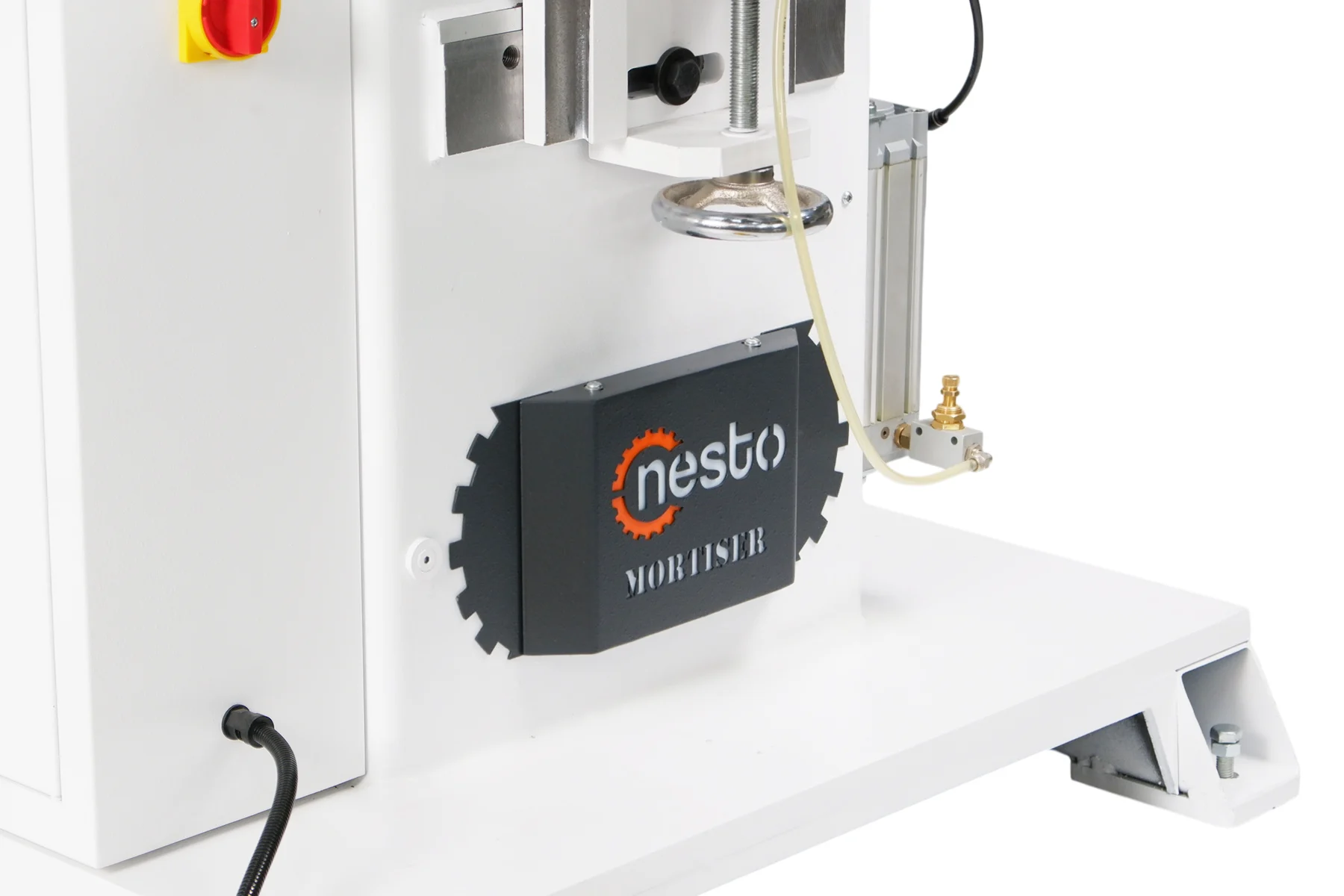
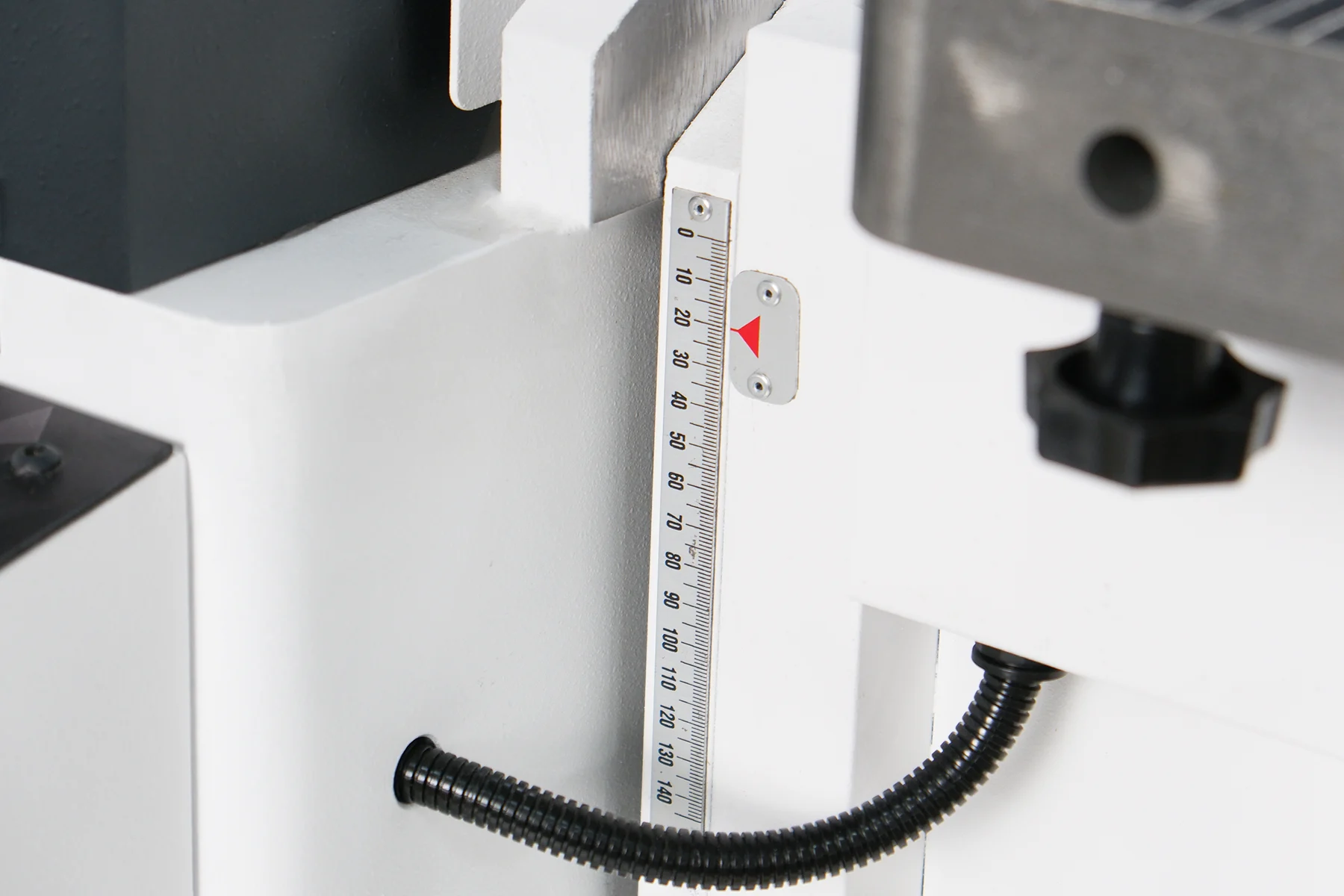
A visible height scale helps the operator repeat the table position when switching between parts or returning to a previous setup.

Mortise and groove machining
The horizontal cutting unit removes material along the joint axis to form the female side of mortise-and-tenon connections in solid-wood components.
Technical Specifications
| Specification | Standard machine |
|---|---|
| Machine dimensions (L × W × H) | 1,365 × 1,400 × 1,500 mm53.74 × 55.12 × 59.06 in |
| Total installed power | 4 kW |
| Machine weight | 400 kg |
| Worktables | Two independently prepared workstations |
| Workpiece clamping | Pneumatic top clamps on both tables |
| Table setting | Angle and height reference adjustments |
| Operator cycle control | Control panel and two foot pedals |
Standard Workstation and Components

Twin worktables
Two separate tables support the preparation of identical parts or two different joint operations within the same production area.
Pneumatic top clamps
Each workstation has pneumatic clamping to hold the workpiece against the table during the cutting cycle.
Angle and height table settings
Graduated angle and height references help document and repeat the mechanical table setting for recurring parts.

Protected horizontal mortising unit
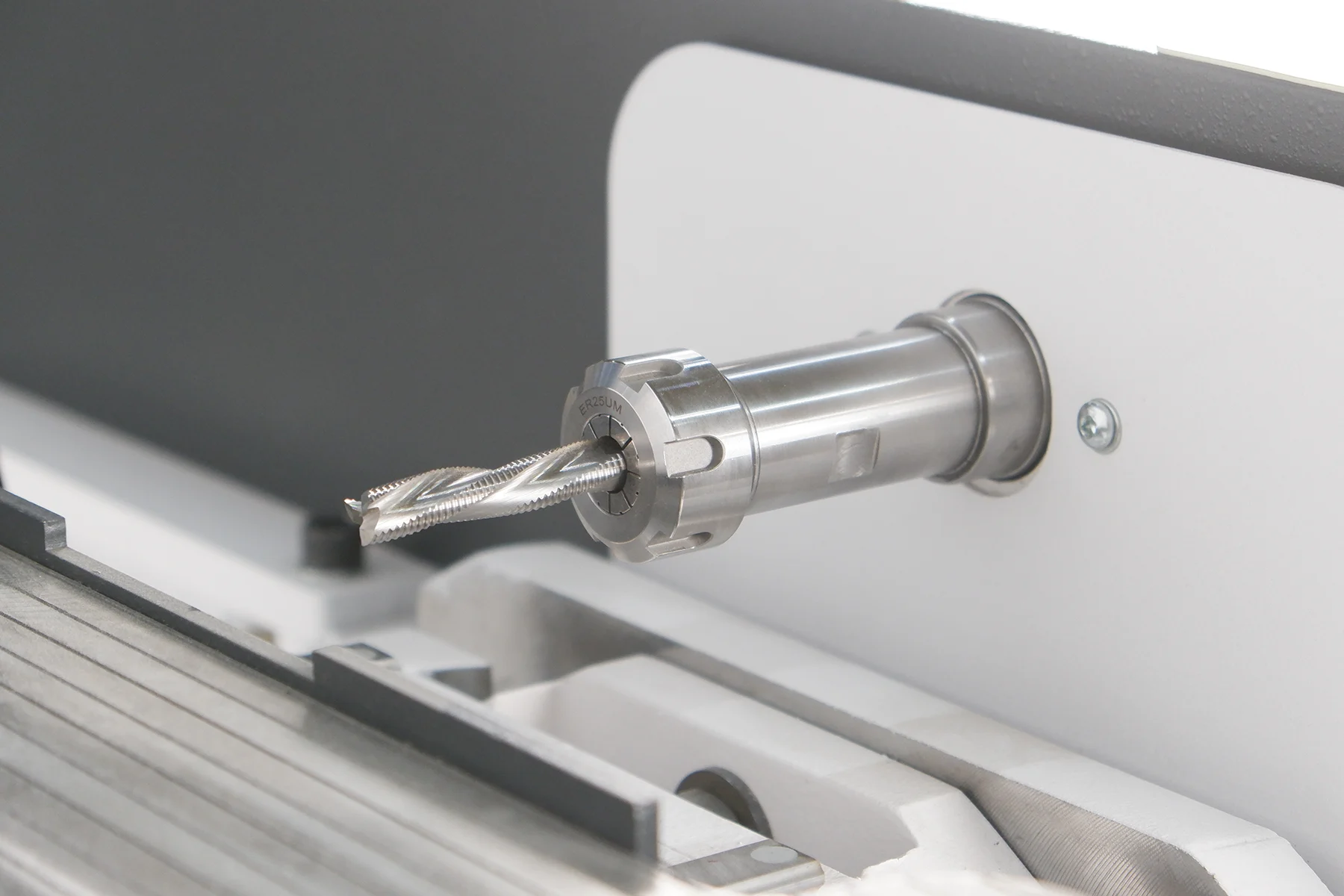
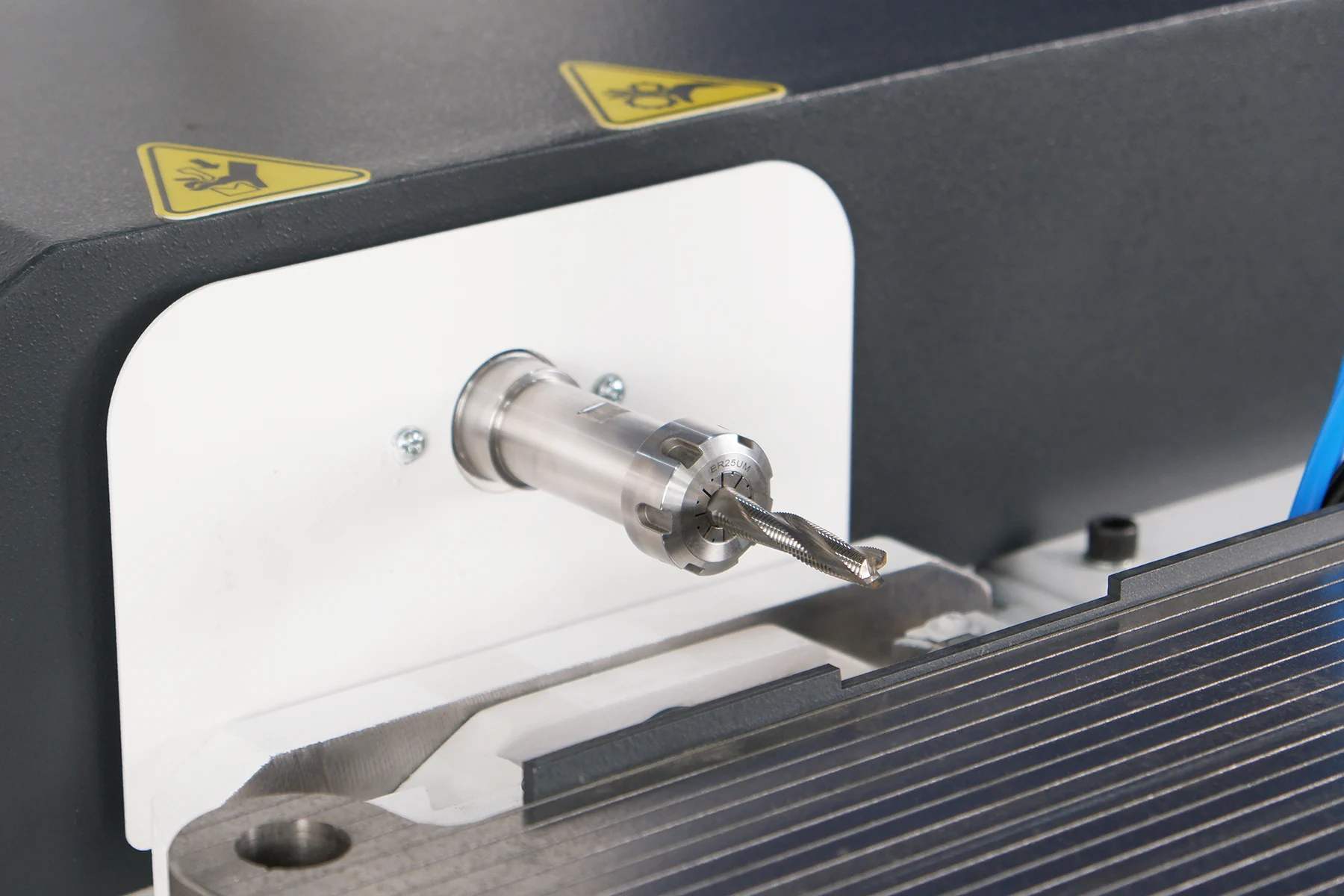
The cutting spindle is housed behind a protective cover, with the working end exposed only at the machining area.

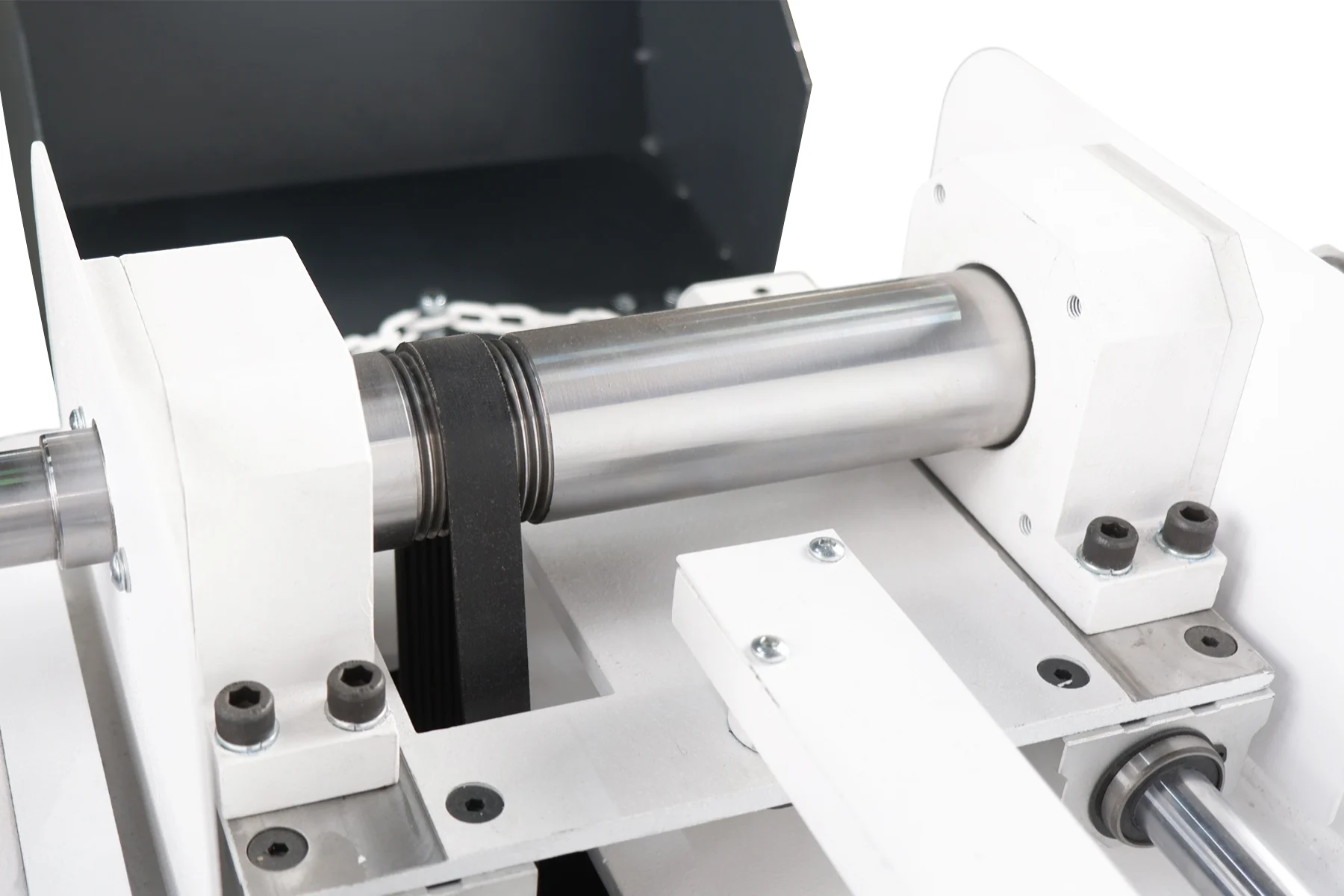
Mortising spindle and cutter holder
The horizontal spindle and cutter holder form the groove along the joint axis and keep the cutting tool aligned with the table reference.

Operator control panel and foot pedals
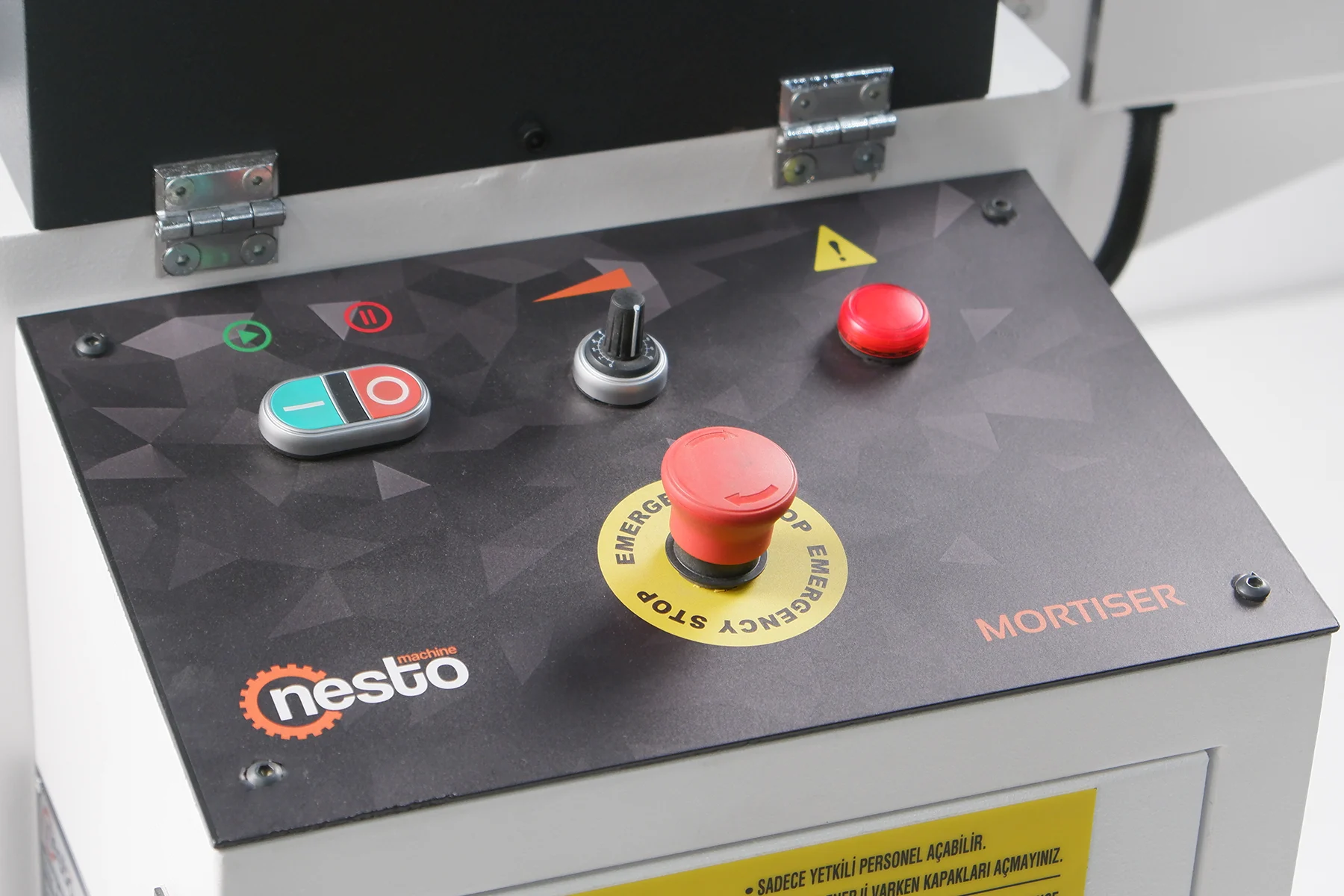
The machine groups start, stop and emergency controls on the front panel; two foot pedals let the operator manage the workstations while handling the part.
Typical applications
- Mortise-and-tenon joints
- Joinery components
- Chair legs
Model selection
Frequently asked questions
What is the Nesto Mortiser Machine designed to produce?
It is designed to machine the female side of mortise-and-tenon joints: mortises and grooves in solid-wood furniture and joinery components. The horizontal cutting unit creates repeatable joint geometry for production parts.
How do the two worktables improve the production flow?
Both worktables can be prepared for the same recurring part or for different operations. While a part is positioned on one side, the other side can remain ready for the next cycle, helping reduce waiting and handling.
How are workpieces clamped and the tables adjusted?
Each table uses a pneumatic top clamp to hold the workpiece during machining. Graduated angle and height references help the operator document and repeat the mechanical table setting for recurring parts.
Which furniture parts are suitable for mortise and groove machining?
Typical applications include chair and table components, furniture frames, rails, legs and other solid-wood joinery parts that require a consistent mortise, slot or groove. Suitability depends on the part section and required joint geometry.
What are the machine dimensions, installed power and weight?
Machine dimensions are 1,365 × 1,400 × 1,500 mm (53.74 × 55.12 × 59.06 in). Total installed power is 4 kW and machine weight is 400 kg (882 lb).
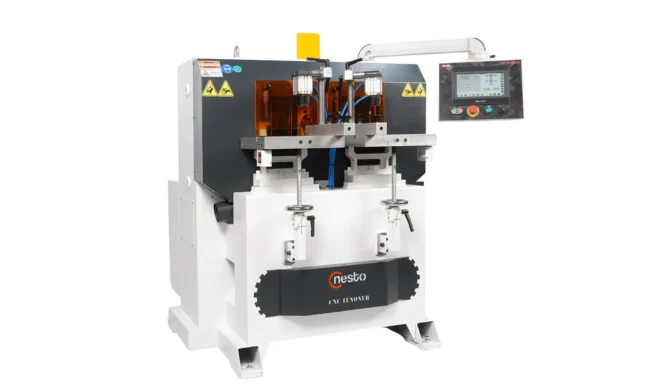
What is the difference between a mortiser and a CNC tenoner?
A mortiser creates the recessed female side of the joint—the mortise or groove. A tenoner forms the projecting male tenon. The two processes are complementary when manufacturing mortise-and-tenon furniture joints.
Which part information should be shared when requesting a production assessment?
Share the part drawing, wood species, cross-section, mortise width, length and depth, required angle, daily quantity and any sample joint. These details help the technical team evaluate the correct setup and cycle approach.
Reviews
There are no reviews yet.