
Match the CNC machining center to your material and operations
Nesto CNC machining centers support routing, drilling and multi-face machining for solid-wood furniture components and production workflows. The right platform depends on part geometry, access requirements, tooling and capacity.
Define the machining requirement before comparing models
Material and part
Clarify whether the work is solid wood or panel-oriented, along with part dimensions, geometry and clamping surfaces.
Axis and access
List the faces, angles, pockets, holes and profiles that must be machined without unnecessary repositioning.
Tooling and flow
Evaluate tool-change needs, CAD/CAM workflow, loading method, repeat quantity and possible line automation.
Toplam 5 sonuç gösteriliyor
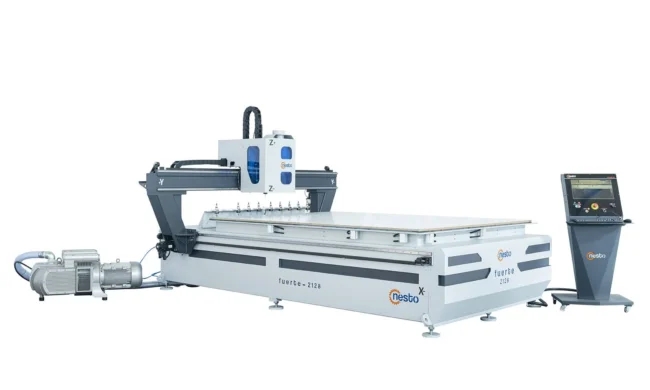
CNC machining center model guide
Compare each model by its intended production role. A workpiece review is the safest way to confirm axis structure, table, spindle and tool magazine.
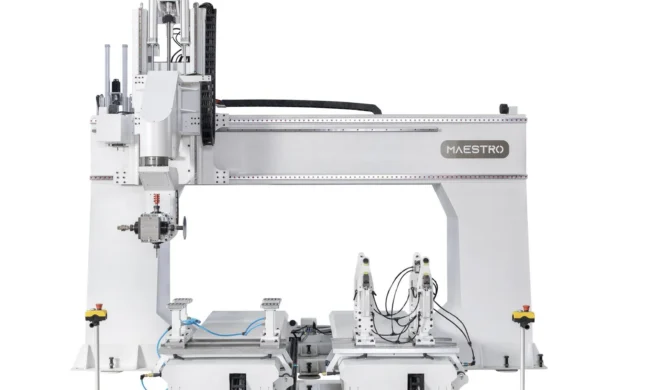
Maestro 5 Axis CNC Machining Center
Five-axis CNC machining center for versatile processing of solid-wood furniture parts.
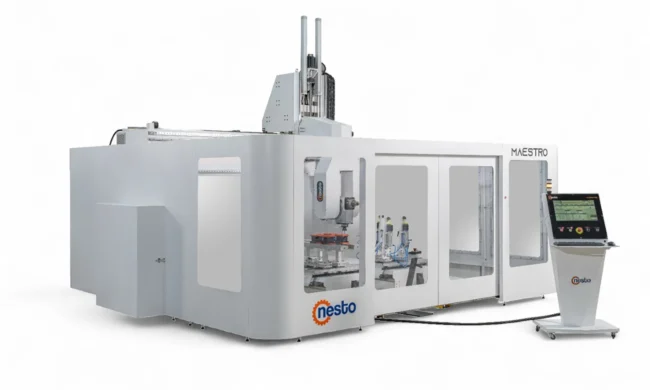
View productMaestro T3 5 Axis Cnc Machining Center
Five-axis CNC solution for multi-sided machining of solid-wood furniture components.
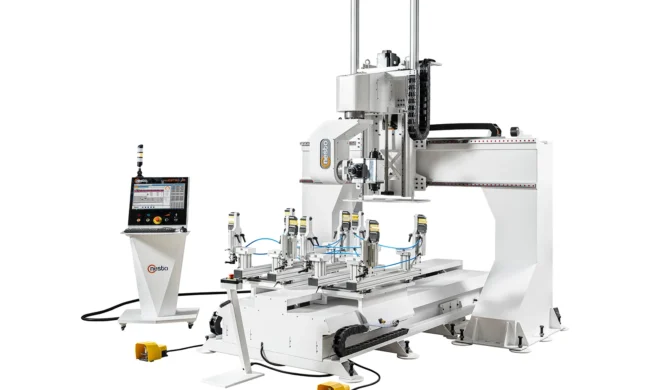
View productMaestro JR. 5 Axis CNC Machining Center
Five-axis solution for multi-sided solid-wood part machining in compact production areas.
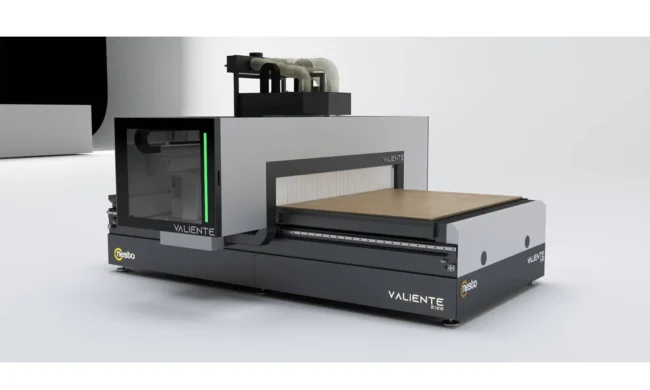
View productValiente 3-Axis CNC Machining Center
Scalable 3-axis CNC center with a 14-tool moving magazine and panel-line automation options.
View productFuerte CNC Machining Center
CNC solution for flexible routing and drilling of solid-wood furniture components.
View productCNC machining center questions
When should a 5-axis CNC machining center be considered?
A 5-axis platform is appropriate when a solid-wood part requires multiple faces, angled features or complex geometry to be machined with fewer setups. The actual benefit should be evaluated with the workpiece and cycle target.
What should be shared for a CNC machining study?
Provide a CAD drawing or sample, material, dimensions, operations, tolerances, surface expectations, batch size and target cycle time. Existing tools and factory loading constraints are also useful.
Can CAD/CAM, tooling and automation be evaluated together?
Yes. The machining strategy, tool magazine, clamping, software flow and loading method should be considered as one production system rather than separate choices.