
Twin-table CNC male-tenon production
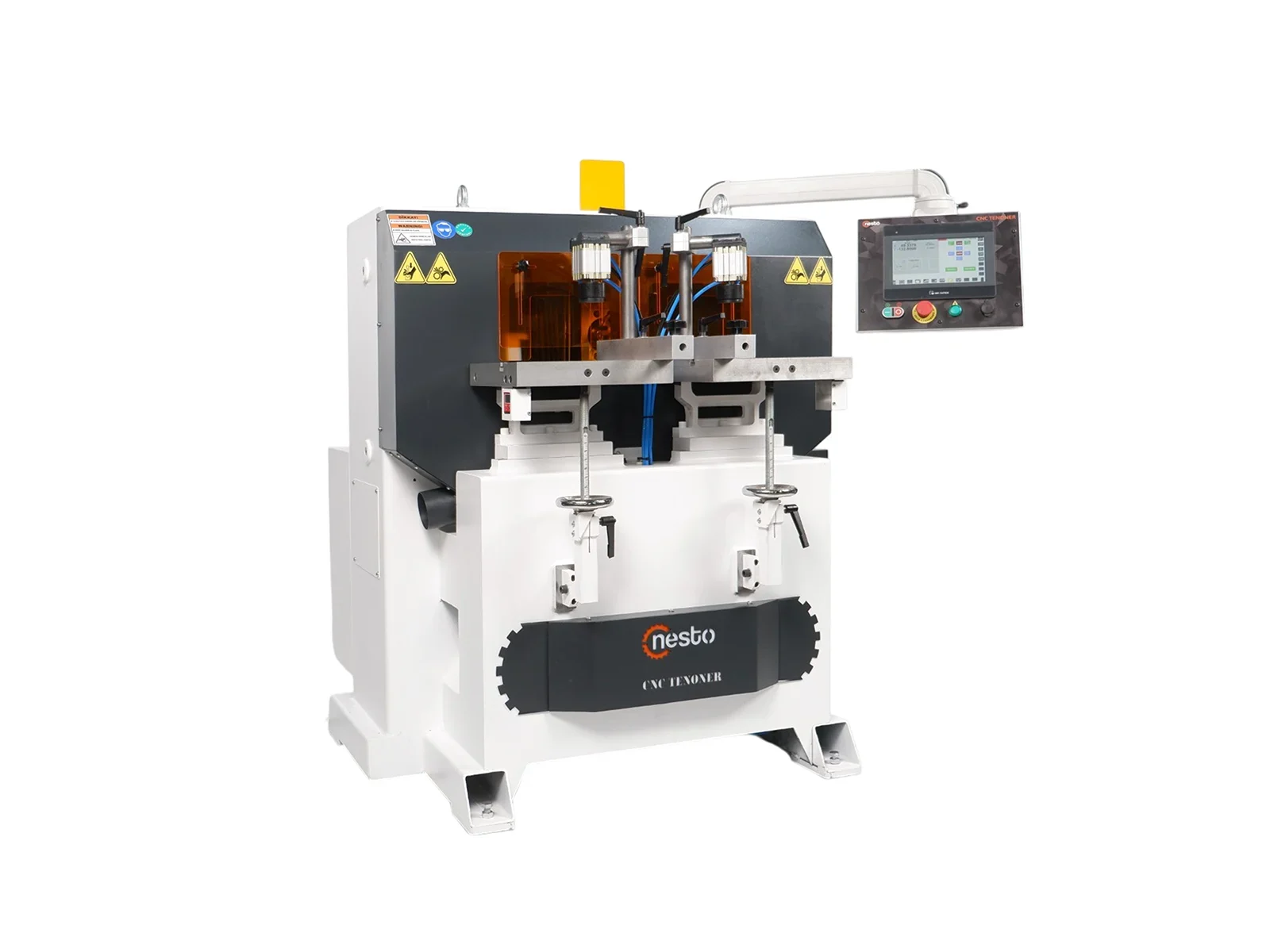
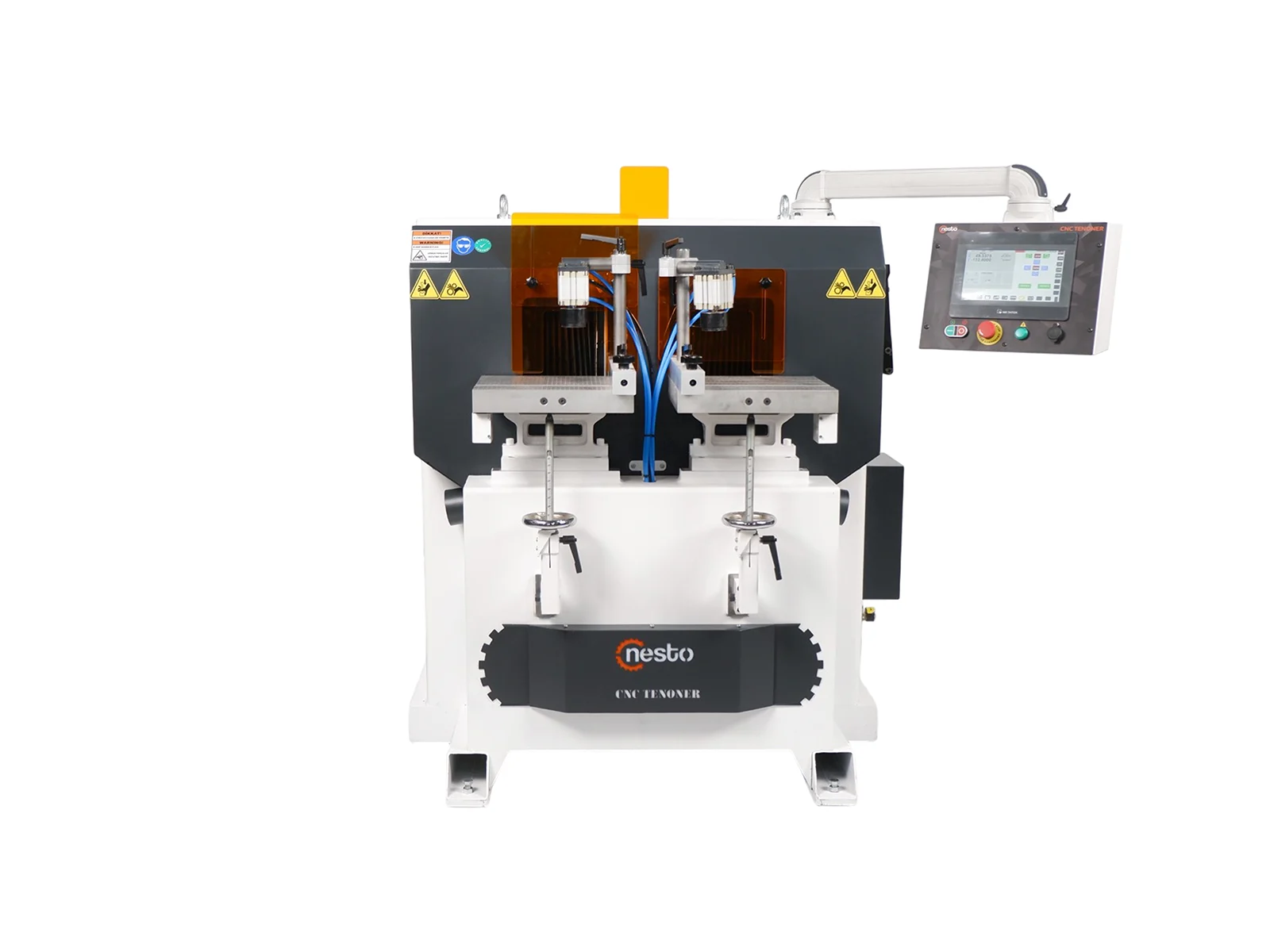
CNC Tenoner Machine
Produce repeatable furniture tenons with controlled geometry
Two independently prepared worktables, stored part programs and a replaceable-insert triple cutting head support consistent male-tenon production.
- 130 × 100 mm maximum straight cutting size
- 0–50 mm depth and 0–90° angle range
- Reference output of 700 tenons per hour
Add the part drawing, wood species, section, tenon dimensions, required angle and daily quantity to the quote form.
General Features and Production Capabilities
CNC male-tenon production for solid-wood joints
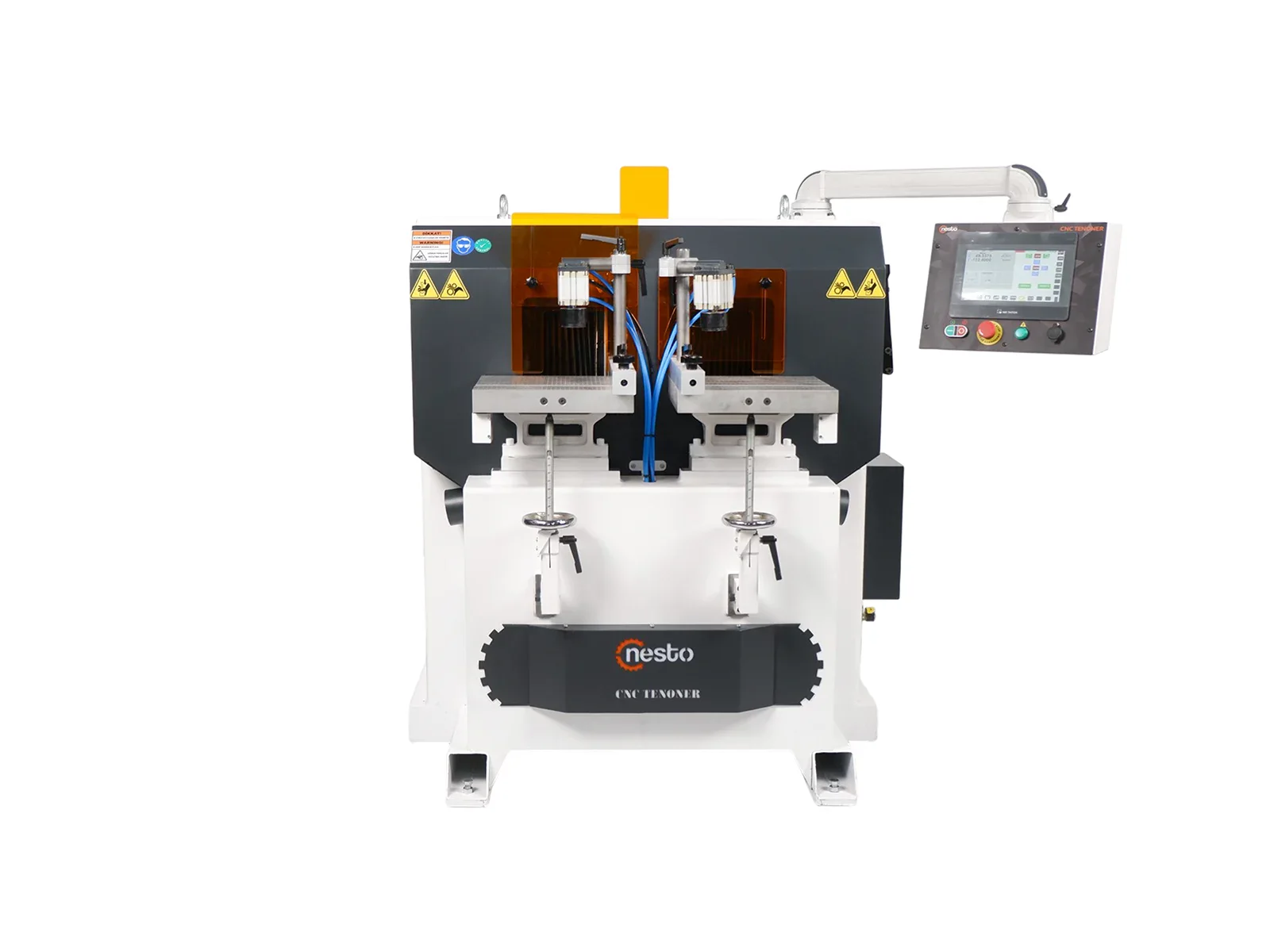
The CNC Tenoner forms the projecting male side of mortise-and-tenon joints for furniture and joinery parts. Controlled geometry, two worktables and stored part programs support repeatable production of rails, frames, legs and similar solid-wood components.

Two independently adjustable worktables
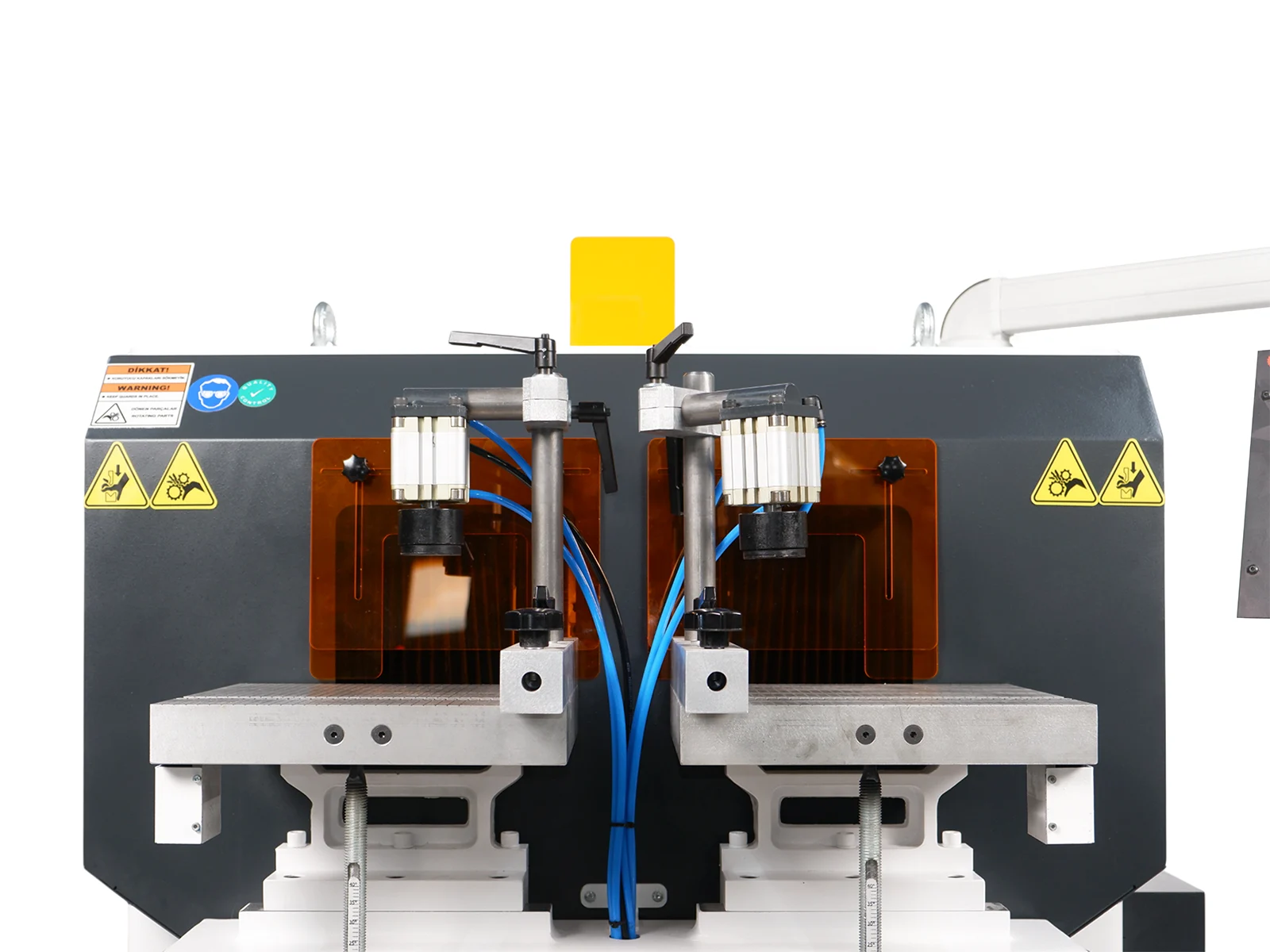
The tables can be prepared for identical recurring parts or for two different jobs. This arrangement helps keep the next workpiece ready and reduces repeated setup and handling.

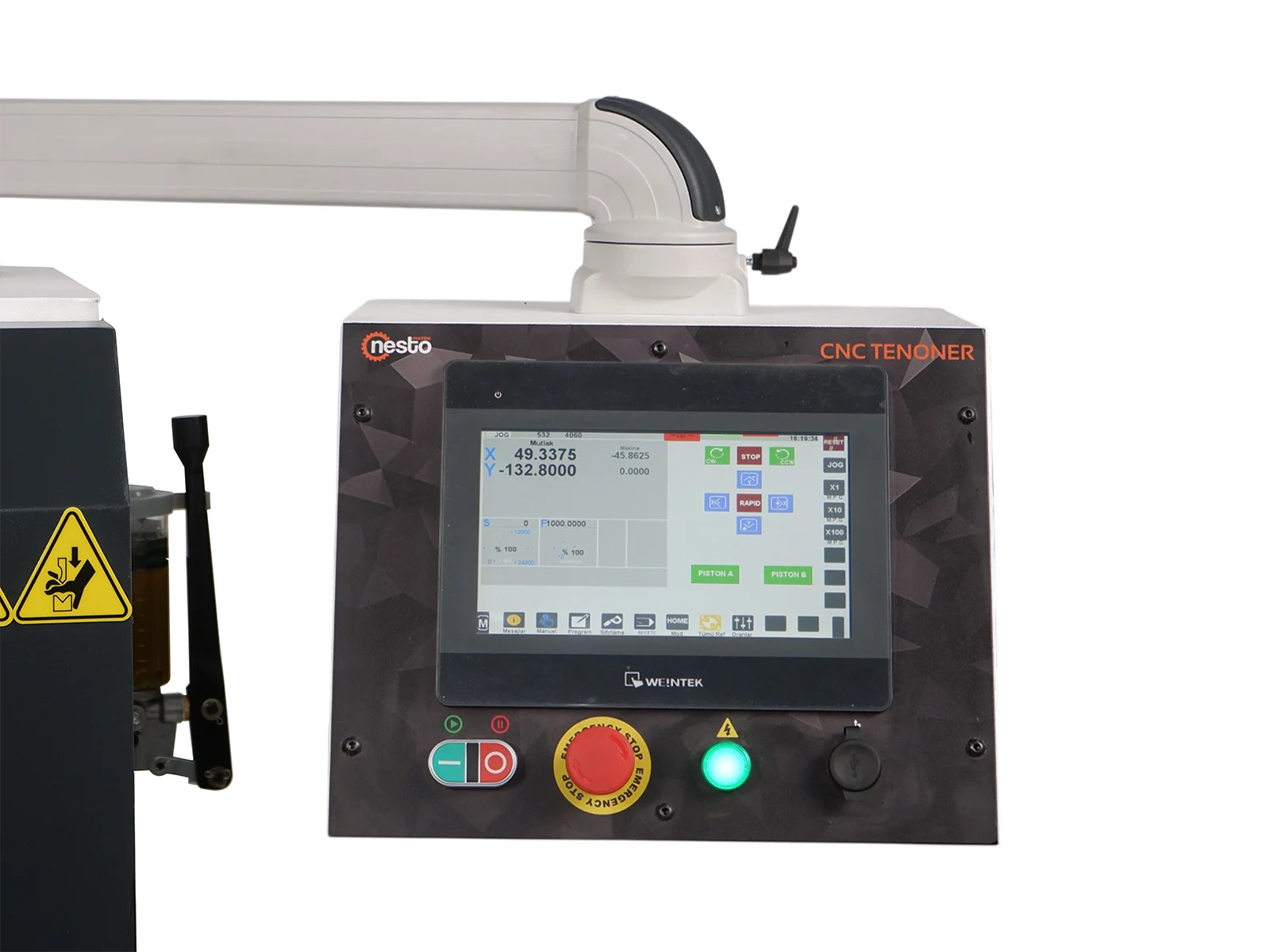
CNC interface and reusable part library
Part names and dimensions can be stored in the control interface. Recurring products can therefore be recalled with less data entry while preserving the documented geometry.

Straight, rounded and profiled tenon geometry
The working range supports straight, rounded and profiled tenon forms within the specified section, length, depth and angle limits. Final suitability is evaluated from the part drawing and joint sample.

Rigid, vibration-resistant chassis
The reinforced body is designed to keep the cutting unit and worktable references stable during recurring production cycles.
Servo-driven axes and precision motion
Servo drive and precision ball-screw motion support controlled positioning when adjusting tenon dimensions, depth and angle between programmed parts.

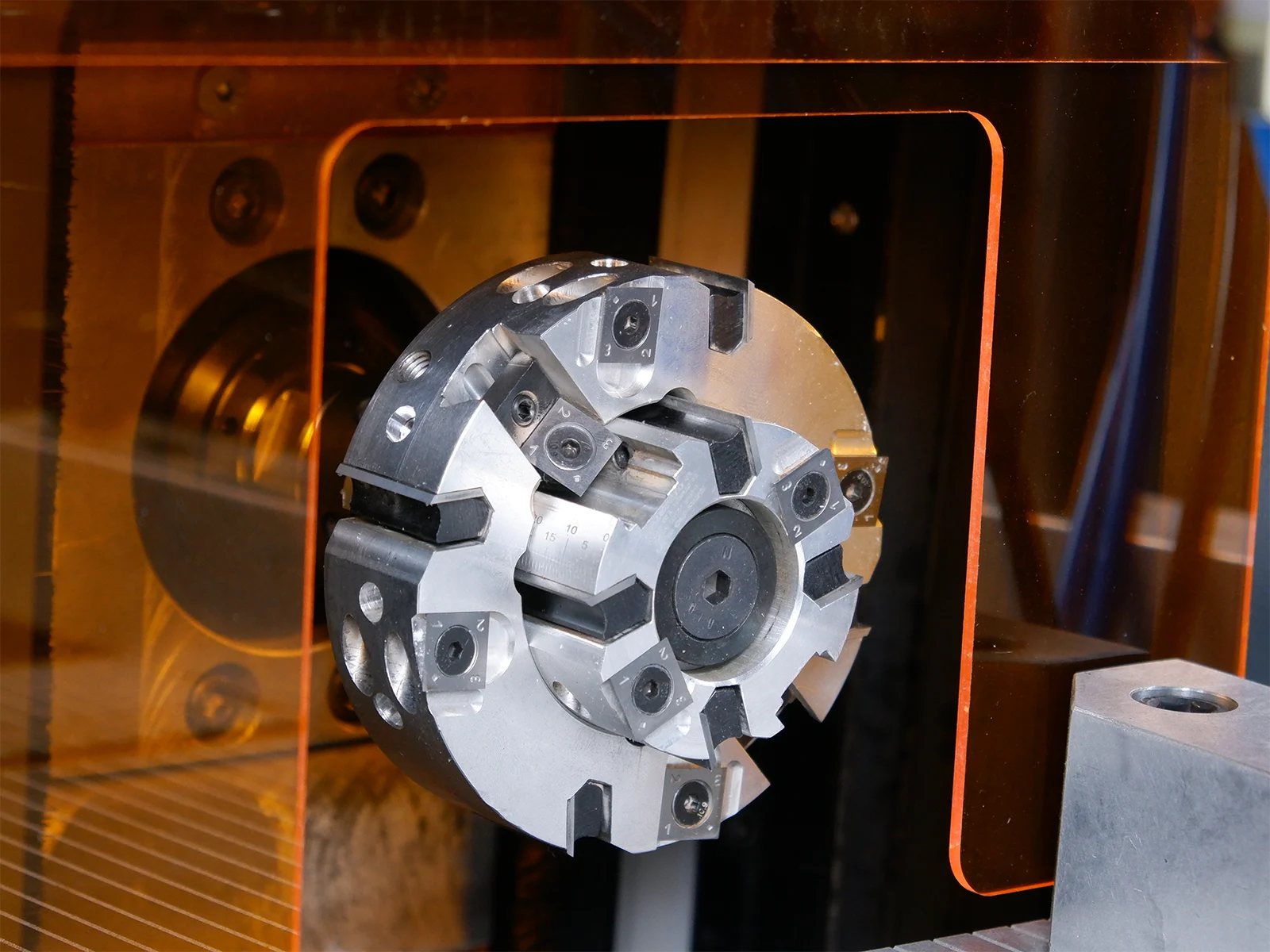
Replaceable-insert triple cutting head
The three-part cutting head uses replaceable inserts so cutting edges can be serviced without replacing the complete tool body.
Technical Specifications
| Specification | Standard machine |
|---|---|
| Maximum straight cutting size | 130 × 100 mm5.12 × 3.94 in |
| Maximum horizontal tenon length | 130 mm5.12 in |
| Maximum vertical tenon length | 90 mm3.54 in |
| Tenon depth range | 0–50 mm0.00–1.97 in |
| Tenon angle range | 0–90° |
| Reference production capacity | 700 tenons/hour |
| Machine dimensions (L × W × H) | 1,230 × 1,220 × 1,520 mm48.43 × 48.03 × 59.84 in |
| Machine weight | 700 kg |
| Total installed power | 5 kW |
| Compressed-air requirement | 6 bar |
Standard Main Equipment
Replaceable-insert triple cutting head
Standard triple-head tooling shapes the male tenon and allows worn inserts to be renewed individually.
Adjustable twin worktables
Two workstations support the same recurring program or different parts, with mechanical references for repeatable positioning.
CNC control and part memory
The operator interface stores part names and dimensional recipes for faster recall of recurring furniture components.

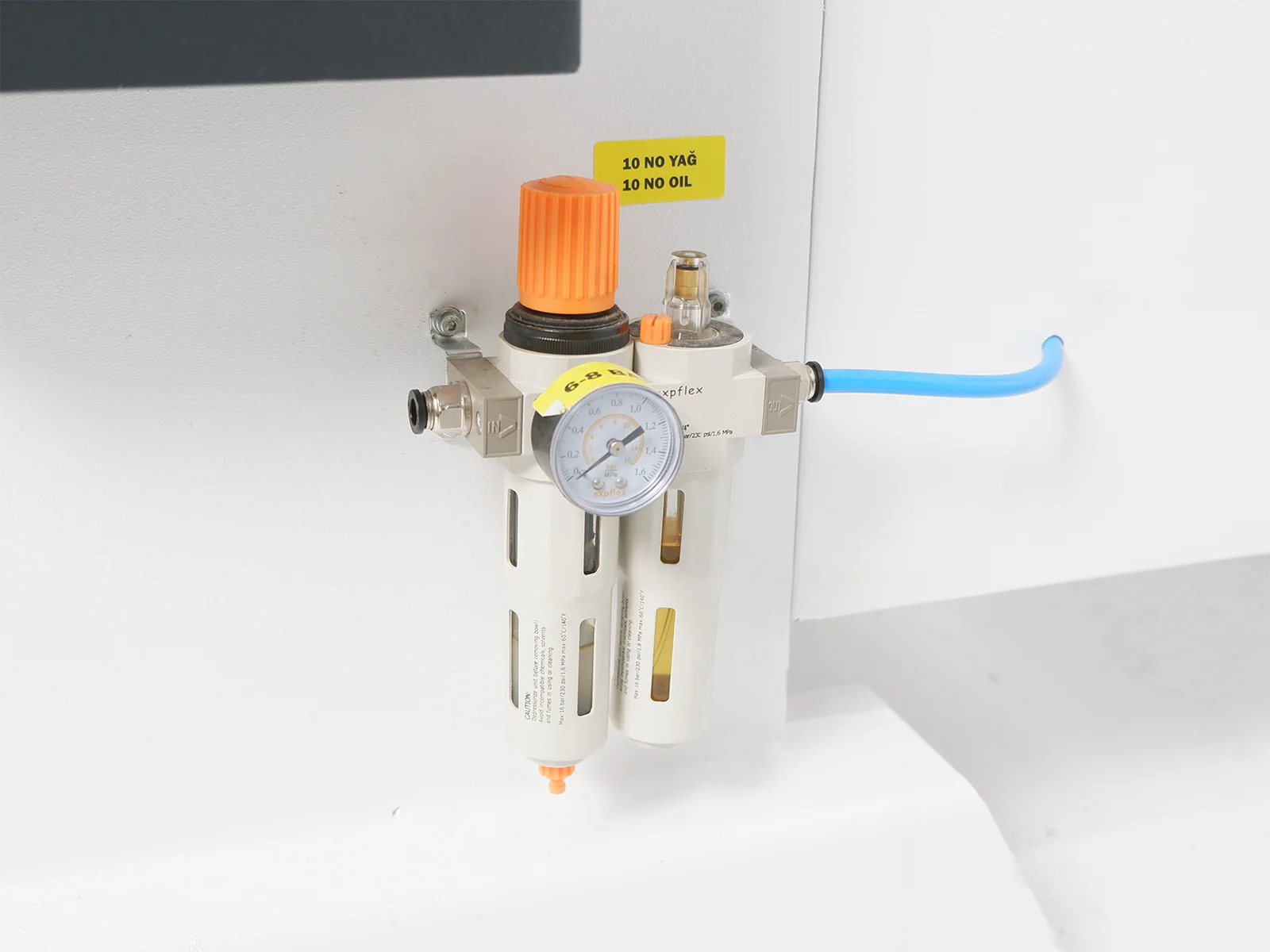
Pneumatic clamping and air preparation
Pneumatic clamps secure the workpiece on both tables. The machine requires a regulated 6 bar compressed-air supply.
- 6 bar

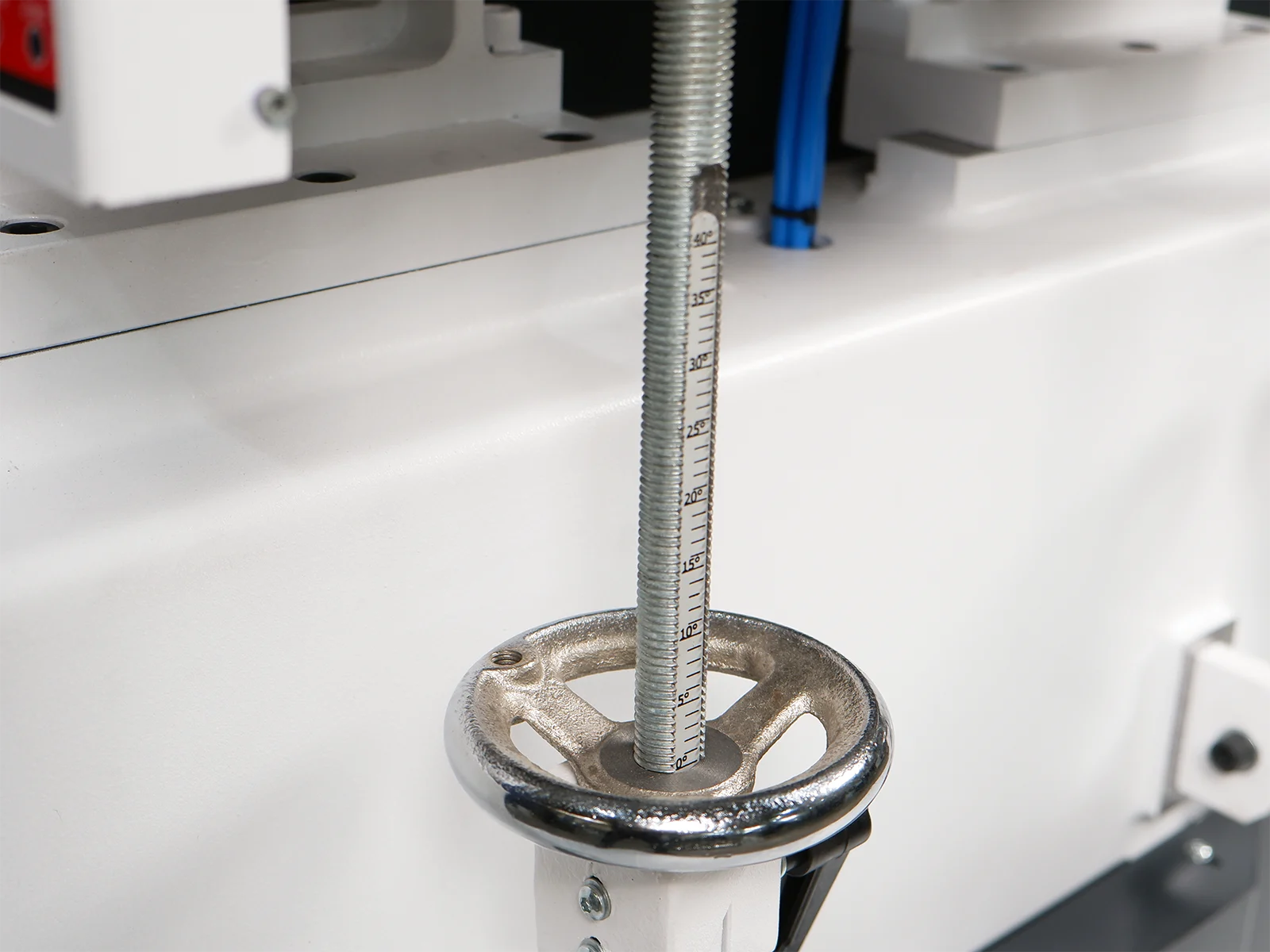
Graduated manual setting references
Graduated scales on the tables help document and repeat mechanical positioning when returning to a known part setup.
Typical applications
- Mortise-and-tenon joints
- Joinery components
- Chair legs
Model selection
Frequently asked questions
What is the Nesto CNC Tenoner Machine designed to produce?
It shapes the projecting male side of mortise-and-tenon joints in solid-wood furniture and joinery components. Typical parts include rails, frames, chair and table components, legs and other pieces that require repeatable tenon geometry.
What are the maximum tenon dimensions and angle range?
Maximum straight cutting size is 130 × 100 mm (5.12 × 3.94 in). Maximum horizontal tenon length is 130 mm (5.12 in), maximum vertical length is 90 mm (3.54 in), depth is adjustable from 0 to 50 mm (0–1.97 in) and angle from 0 to 90°.
How do the two worktables improve production?
The two tables can be prepared for the same recurring part or for different jobs. One side can remain ready while the next workpiece is positioned on the other, helping reduce repeated setup and handling time.
What does the CNC control and part library provide?
The interface stores part names and dimensional recipes. A recurring component can therefore be recalled with less data entry while preserving its documented tenon geometry.
How does the replaceable-insert triple cutting head work?
The standard three-part cutting head forms the male tenon with replaceable cutting inserts. Worn edges can be renewed individually without replacing the complete tool body.
What are the machine dimensions, power, weight and air requirement?
Machine dimensions are 1,230 × 1,220 × 1,520 mm (48.43 × 48.03 × 59.84 in). Installed power is 5 kW, machine weight is 700 kg (1,543 lb) and regulated compressed air at 6 bar is required. Reference output is 700 tenons/hour and varies with the part and setup.
What is the difference between a CNC tenoner and a mortiser, and what should be shared for an assessment?
The tenoner forms the projecting male tenon; the mortiser creates the recessed female mortise or groove. For an assessment, share the part drawing, wood species, section, tenon length, depth, angle, daily quantity and a sample joint if available.
Reviews
There are no reviews yet.