
Industrial CNC solution
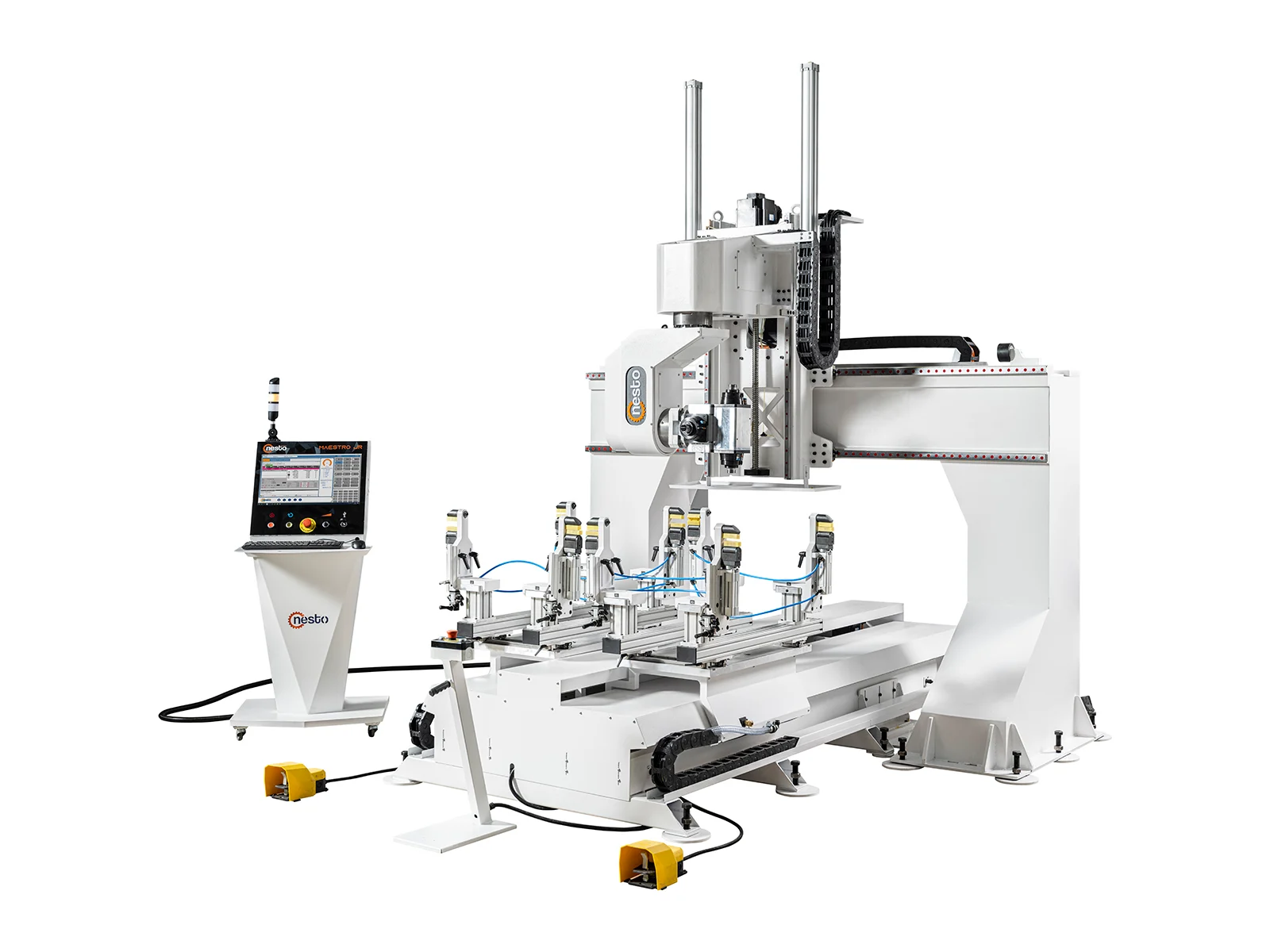
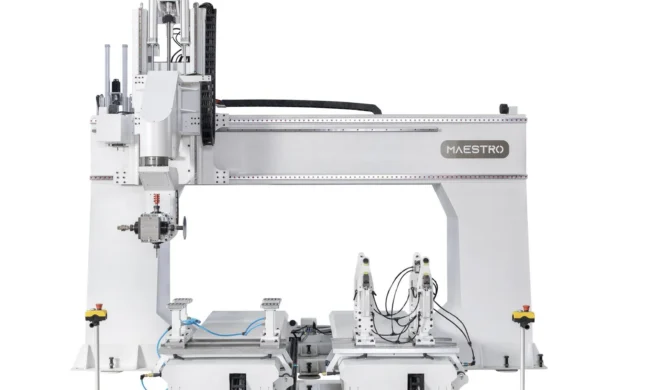
Maestro JR. 5 Axis CNC Machining Center
Configure the right machine for your production
Share your part, material and capacity requirements. Our team will help you determine the suitable machine configuration.
- Application-focused configuration
- Technical sales guidance
- Installation and service planning
You can include part drawings and production expectations in the quote form.
General Features and Production Capabilities

Compact five-axis machining for solid-wood parts
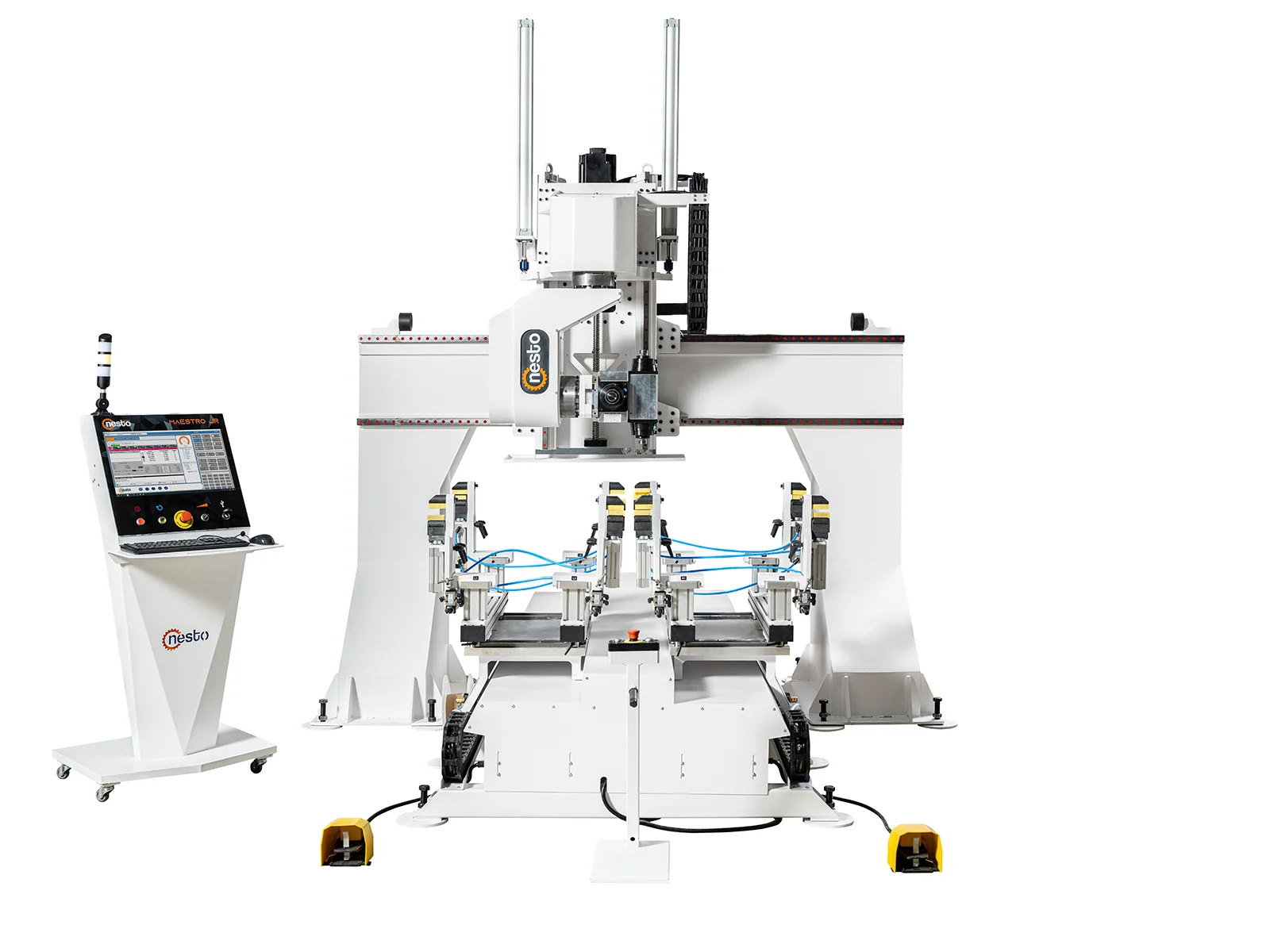
Maestro JR. brings coordinated multi-face milling, drilling, profiling and joinery operations into a compact 1,200 × 1,200 × 500 mm working envelope.
- X 1,200 mm
- Y 1,200 mm
- Z 500 mm

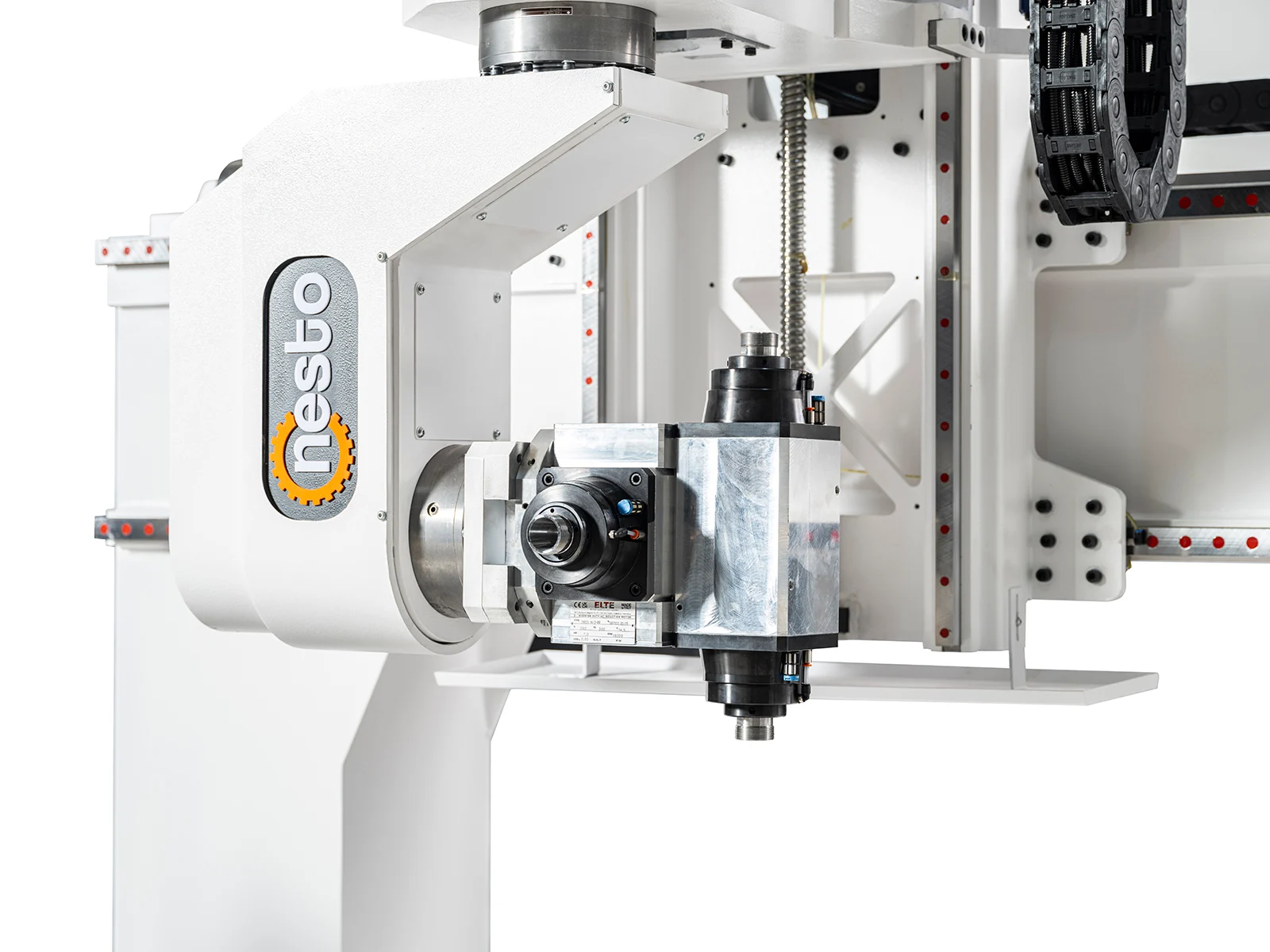
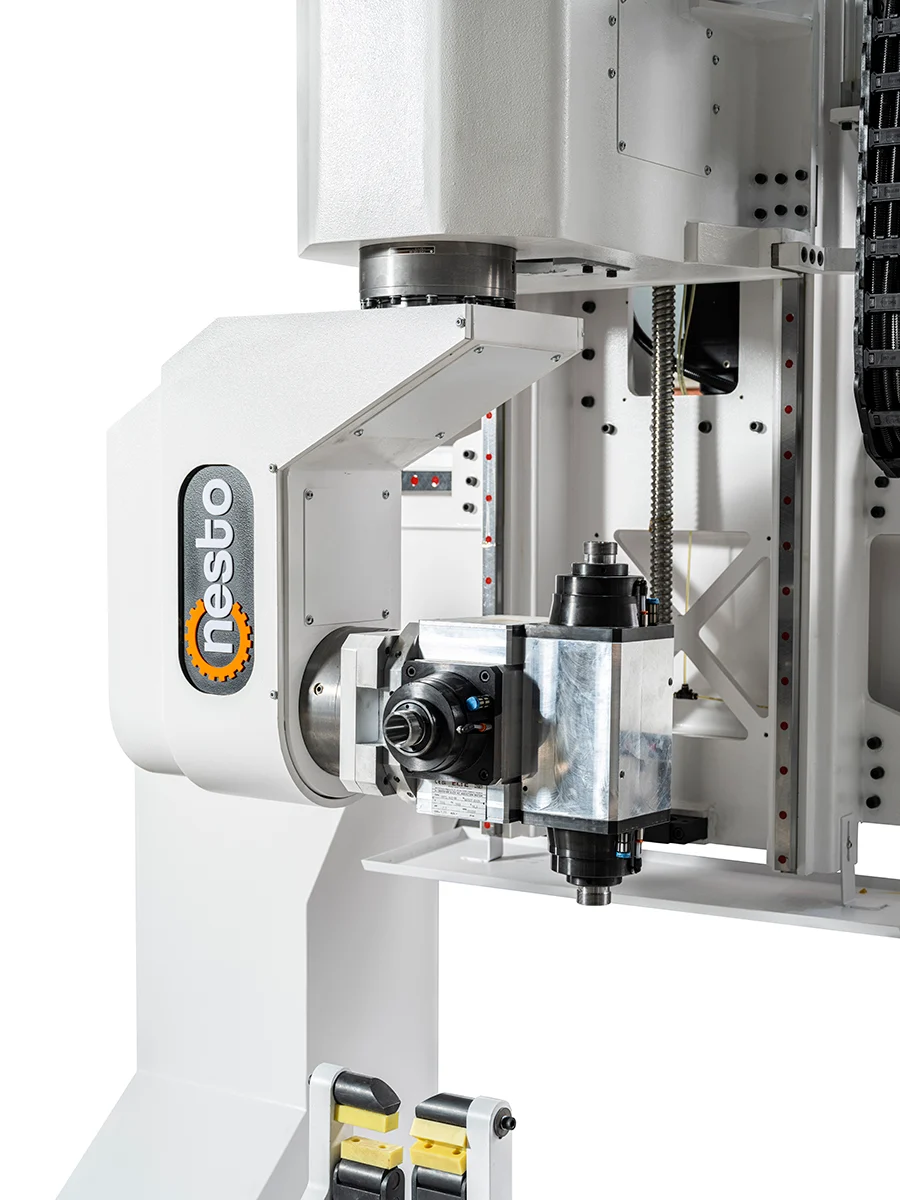
ELTE 2+2 head for multi-direction operations
The 7 kW spindle head provides vertical and cross-oriented tool outputs at up to 18,000 rpm, helping reach different faces with fewer fixture changes.
- ELTE 2+2
- 7 kW
- 18,000 rpm

Servo-driven motion on every axis
Servo motors support controlled acceleration, coordinated movement and repeatable positioning across the complete machining envelope.

Rigid monoblock chassis for stable machining
The reinforced, vibration-resistant structure provides a stable base for high-speed spindle work and coordinated five-axis movement.

Adjustable workholding for different geometries
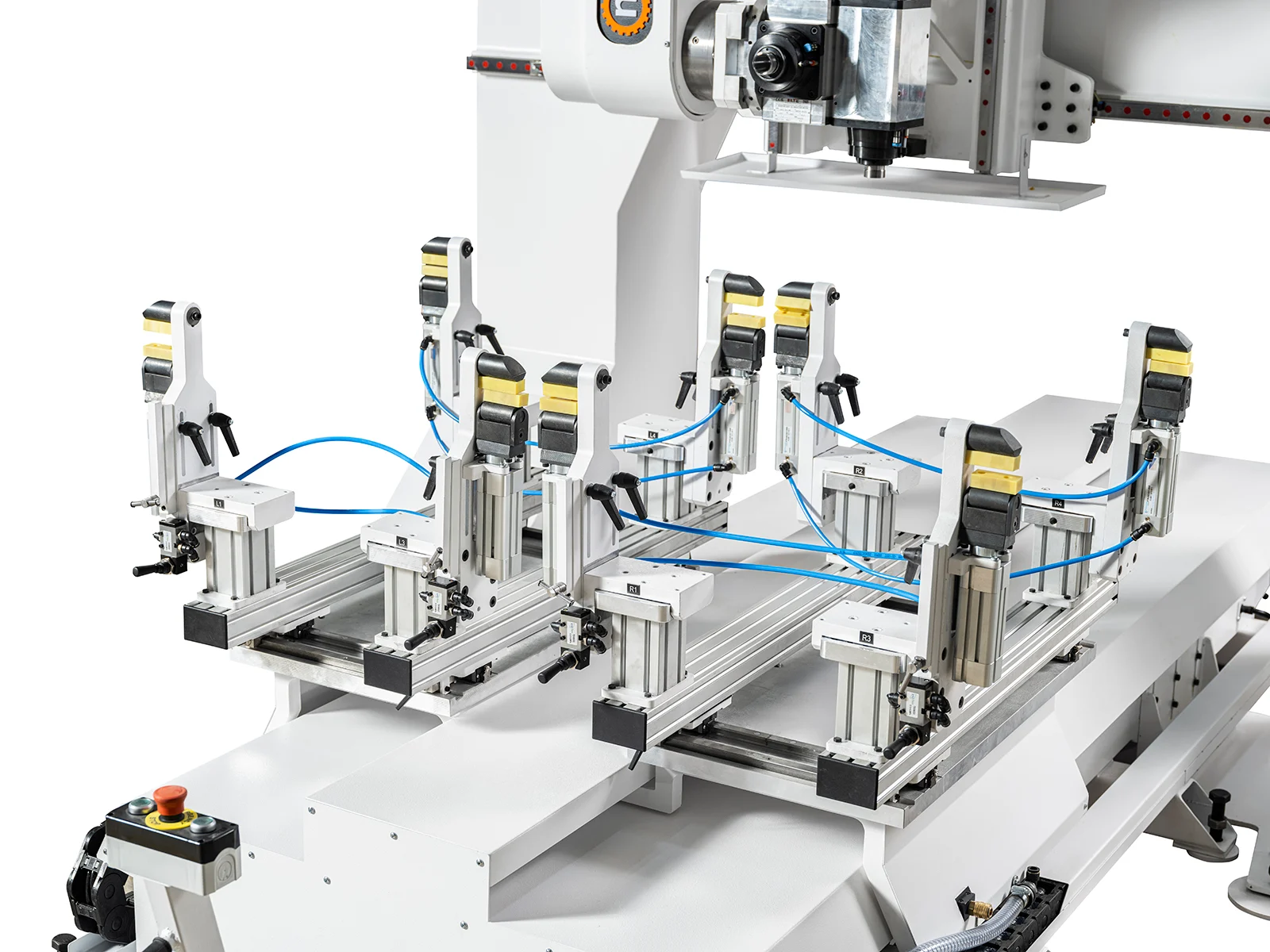
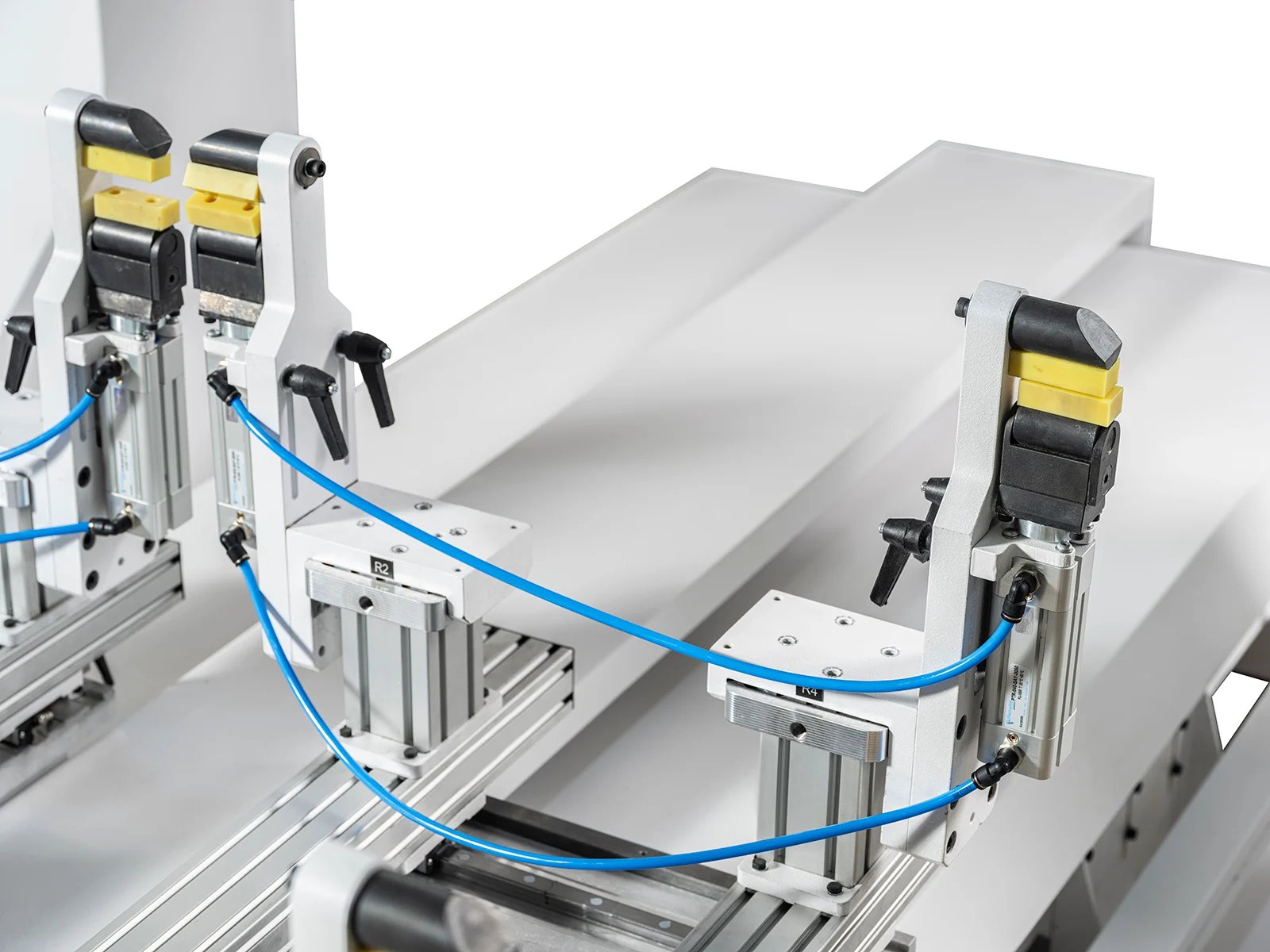
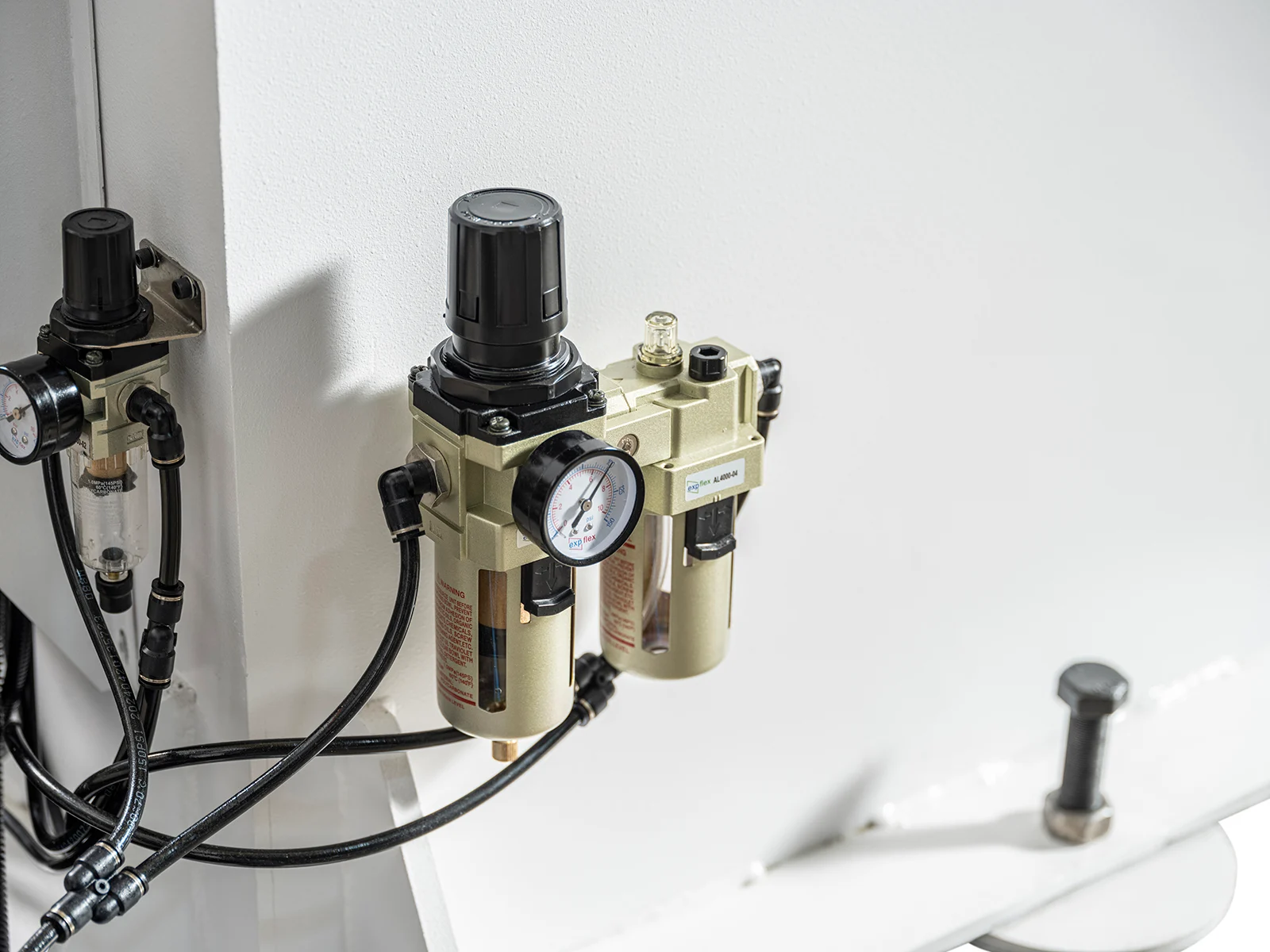
Movable supports and pneumatic clamps help position solid-wood blanks while preserving tool access for multi-sided machining.

Fixture support for long and irregular components
Adjustable support positions allow the fixture plan to follow the raw stock, finished geometry and required machining faces.

Remote visibility and production reporting
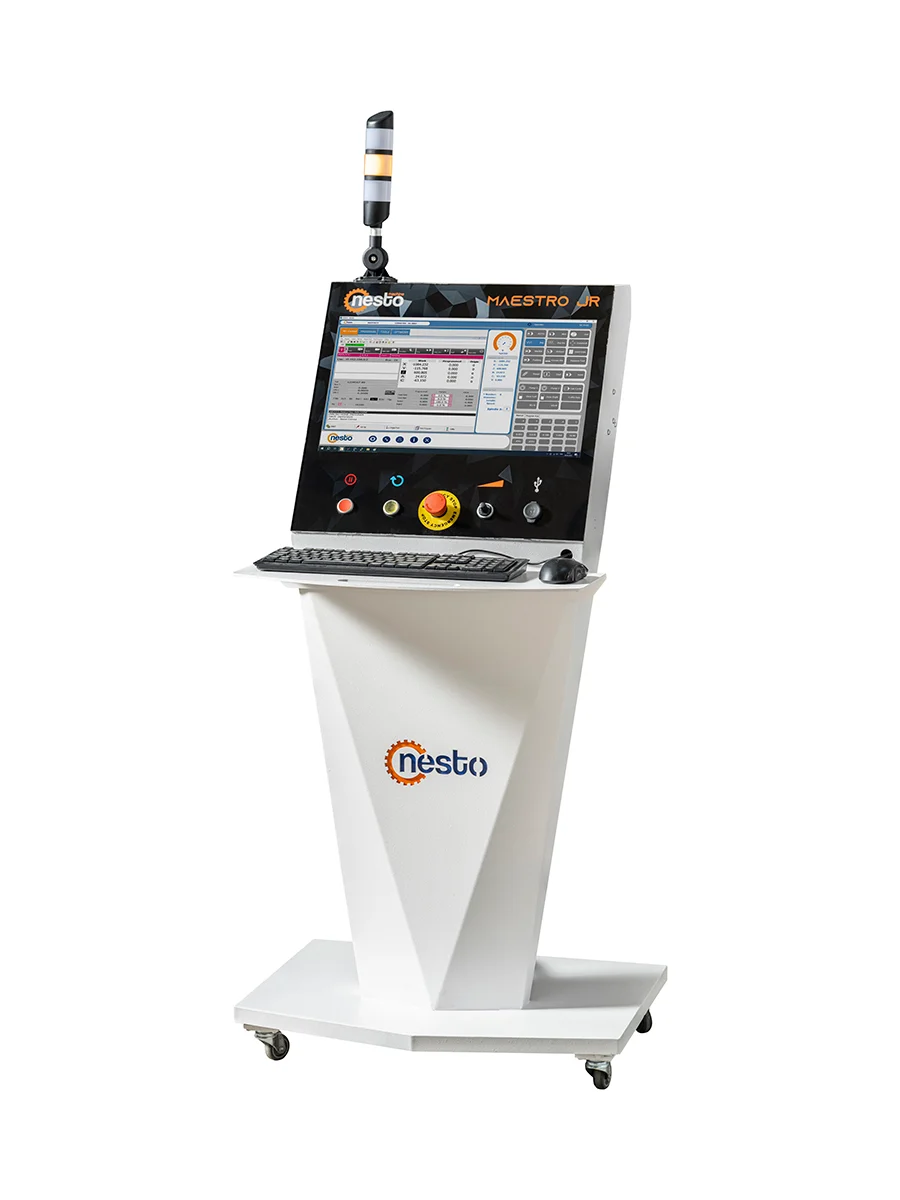
The operator station combines machine control, remote connection, advanced reporting and 3D preview for clearer production follow-up.

CAD/CAM simulation and optimized programming
Models can be programmed and simulated in 3D before machining. Supported STL, DWG, DXF and IGES data can enter the workflow, while optimization helps arrange operation order.
Technical Specifications
| Specification | Maestro JR. |
|---|---|
| X-axis travel | 1,200 mm47.24 in |
| Y-axis travel | 1,200 mm47.24 in |
| Z-axis travel | 500 mm19.69 in |
| Spindle configuration | ELTE 2+2 |
| Spindle power | 7 kW (9.38 HP) |
| Spindle speed | 18,000 rpm |
| Spindle bearings | Ceramic bearings |
| Axis drive | Servo motors on all axes |
| Chassis construction | Reinforced · vibration-resistant · rigid monoblock |
| Control functions | Remote connection · advanced reporting · 3D preview |
| CAD/CAM functions | Model programming · 3D simulation · production optimization |
| Supported data workflow | STL · DWG · DXF · IGES |
| Dimensions with safety enclosure (L × W × H) | 4,800 × 4,800 × 3,900 mm188.98 × 188.98 × 153.54 in |
| Dimensions without safety enclosure (L × W × H) | 4,075 × 3,400 × 3,900 mm160.43 × 133.86 × 153.54 in |
Standard Main Equipment
ELTE 2+2 machining spindle
The 7 kW spindle operates at up to 18,000 rpm with ceramic bearings for vertical and cross-oriented machining operations.
Industrial operator control
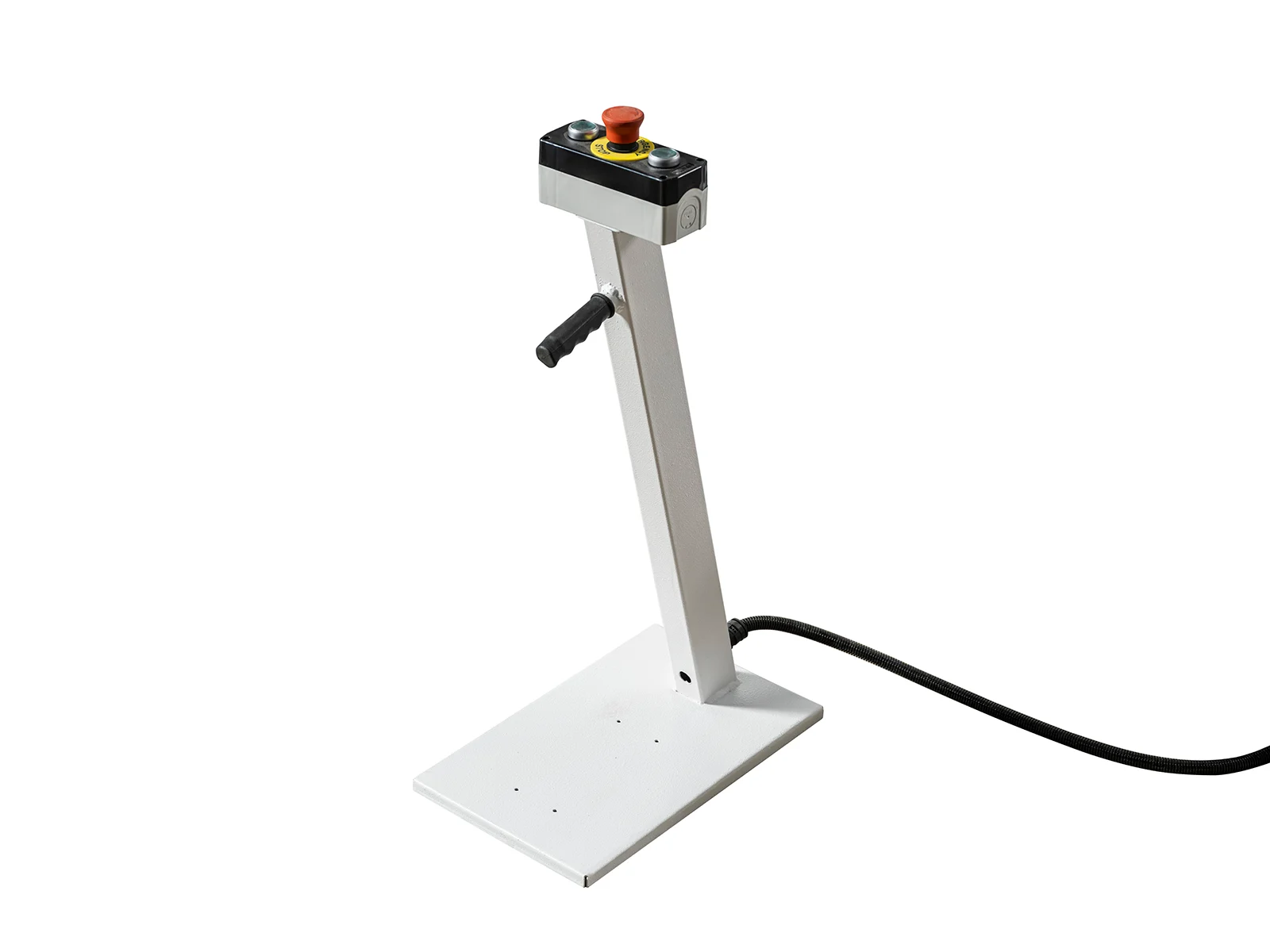
The mobile console brings together axis control, remote connection, advanced reporting and 3D part preview.
Servo-driven axis group
Servo motors drive every axis for coordinated acceleration and repeatable positioning.

CAD/CAM model preparation
The digital workflow supports model programming and compatible file transfer before the machining program is released.
3D machine simulation
The machine, part and fixture relationship can be reviewed in the digital environment before production.

Part-model programming workflow
Part models can be prepared, reviewed and converted into a machining workflow with operation sequencing support.
Adjustable pneumatic workholding
Movable supports and pneumatic clamps adapt the fixture layout to different solid-wood part geometries.
Installation Configurations

Fully enclosed installation
The documented enclosed layout measures 4,800 × 4,800 × 3,900 mm. Final service, extraction, electrical and material-handling clearances are planned separately.
- 4,800 × 4,800 × 3,900 mm
Open installation without enclosure
The documented open layout measures 4,075 × 3,400 × 3,900 mm. The required perimeter safety system is determined in the final installation plan.
- 4,075 × 3,400 × 3,900 mm
Typical applications
- Multi-face solid-wood machining
- Complex furniture components
- Chair legs
- Joinery components
Model selection
Frequently asked questions
Which parts can the Maestro JR. 5-Axis CNC Machining Center produce?
It is designed for compact solid-wood furniture components that require multi-face milling, drilling, profiling or joinery operations. Typical suitability is assessed from the part drawing or 3D model, blank dimensions, finished geometry, fixture plan and required tool access.
What is the documented working envelope?
The documented travels are 1,200 mm in X, 1,200 mm in Y and 500 mm in Z, approximately 47.24 × 47.24 × 19.69 inches. Actual usable space depends on the fixture, tool orientation, part geometry and collision-safety plan.
How does the ELTE 2+2 spindle head support machining?
The 7 kW (9.38 HP) spindle provides vertical and cross-oriented tool outputs at up to 18,000 rpm. Ceramic bearings support high-speed operation, while the 2+2 arrangement helps reach multiple faces with fewer fixture changes. The exact path is verified in CAD/CAM for each part.
What do the servo axes and rigid chassis contribute?
Servo motors on all axes support coordinated acceleration and repeatable positioning. The reinforced, vibration-resistant monoblock chassis provides a stable base for the spindle and multi-axis movement. Part accuracy still depends on the blank, fixture, tooling, program and process conditions.
What do the control, CAD/CAM and optimizer functions provide?
The operator station combines remote connection, advanced reporting and 3D preview. The CAD/CAM workflow supports model programming, 3D simulation and supported STL, DWG, DXF and IGES data, while optimization helps arrange the machining sequence before production.
What are the enclosed and open installation dimensions?
The documented enclosed layout is 4,800 × 4,800 × 3,900 mm (188.98 × 188.98 × 153.54 in). The open layout is 4,075 × 3,400 × 3,900 mm (160.43 × 133.86 × 153.54 in). Service access, extraction, electrical infrastructure, material handling and perimeter safety space must be added to the final plan.
Which part data should be shared for a production evaluation?
Share the part drawing or 3D model, wood species, raw-stock dimensions, finished geometry, faces and operations to be machined, expected daily quantity, surface target and preferred workholding method. A physical sample is useful when geometry or wood behaviour requires validation.
Reviews
There are no reviews yet.