Industrial CNC solution
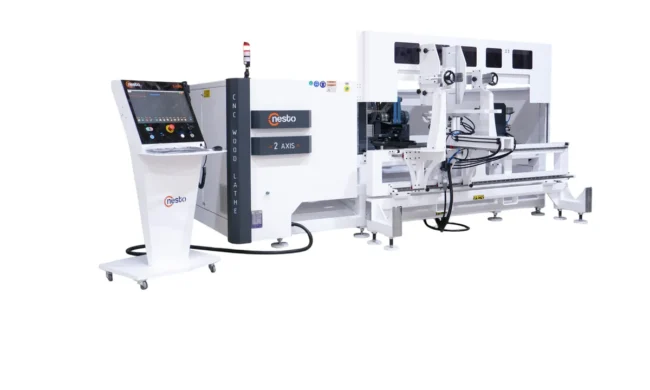
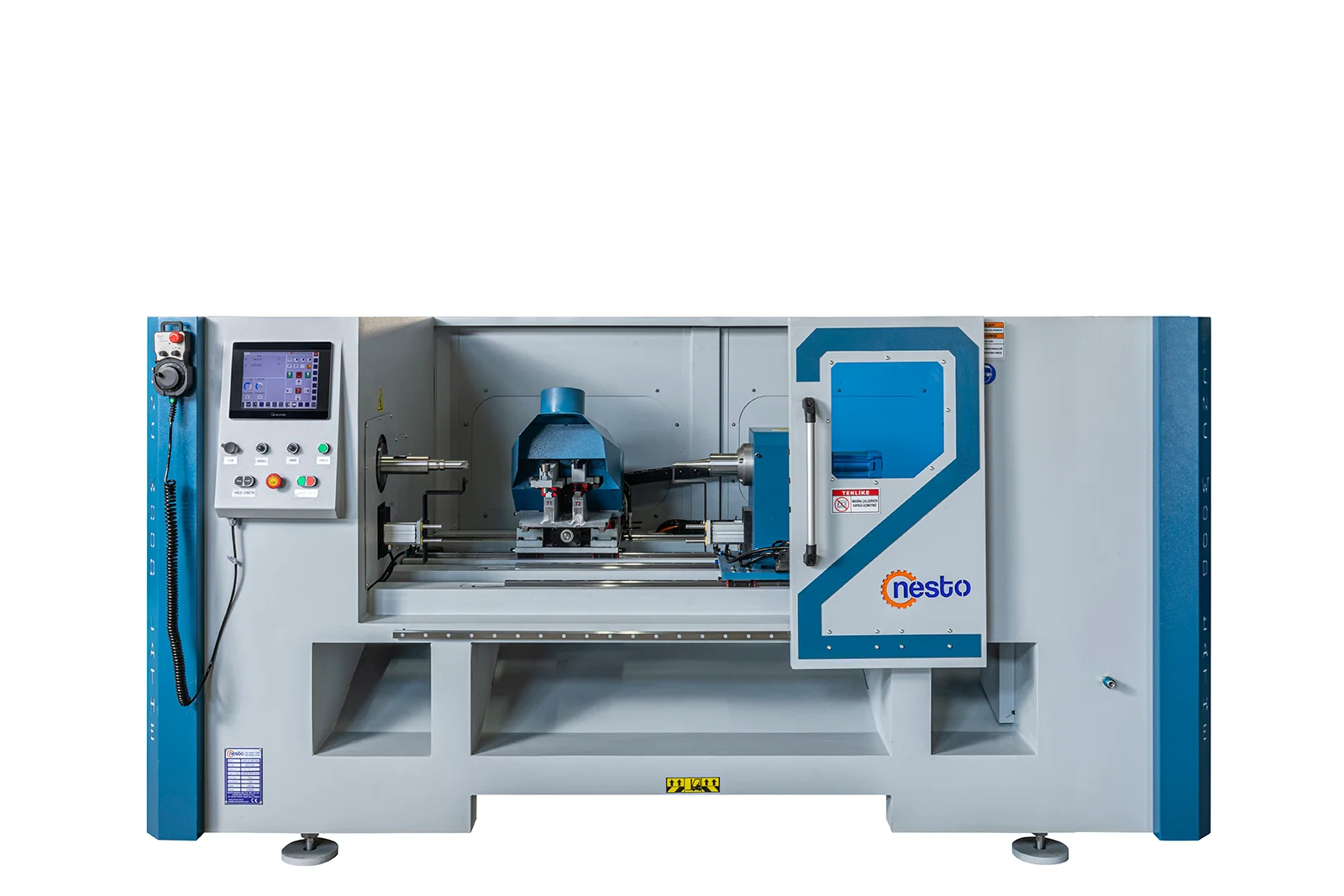
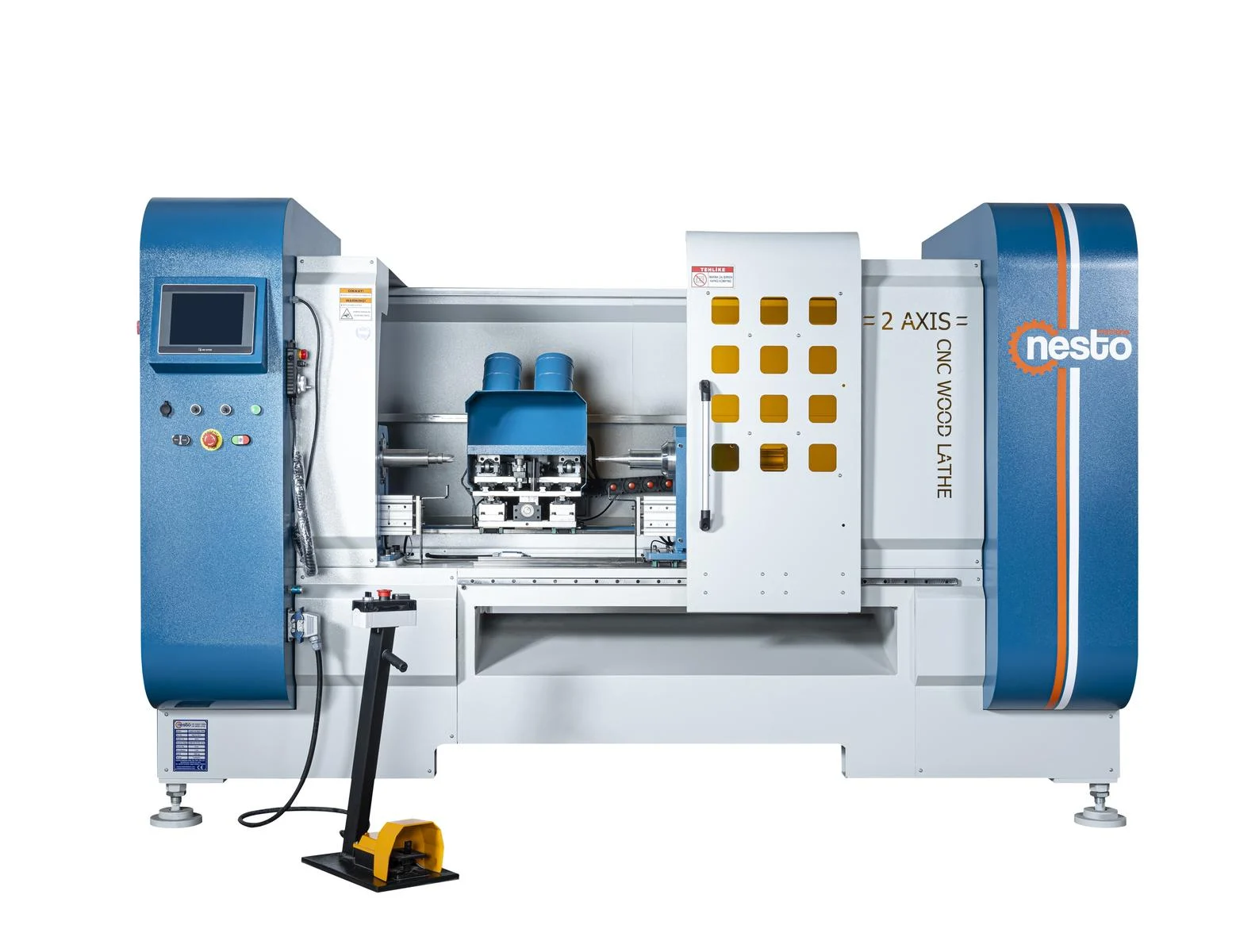
2 Axis CNC Wood Lathe Machine
Configure the right machine for your production
Share your part, material and capacity requirements. Our team will help you determine the suitable machine configuration.
- Application-focused configuration
- Technical sales guidance
- Installation and service planning
You can include part drawings and production expectations in the quote form.
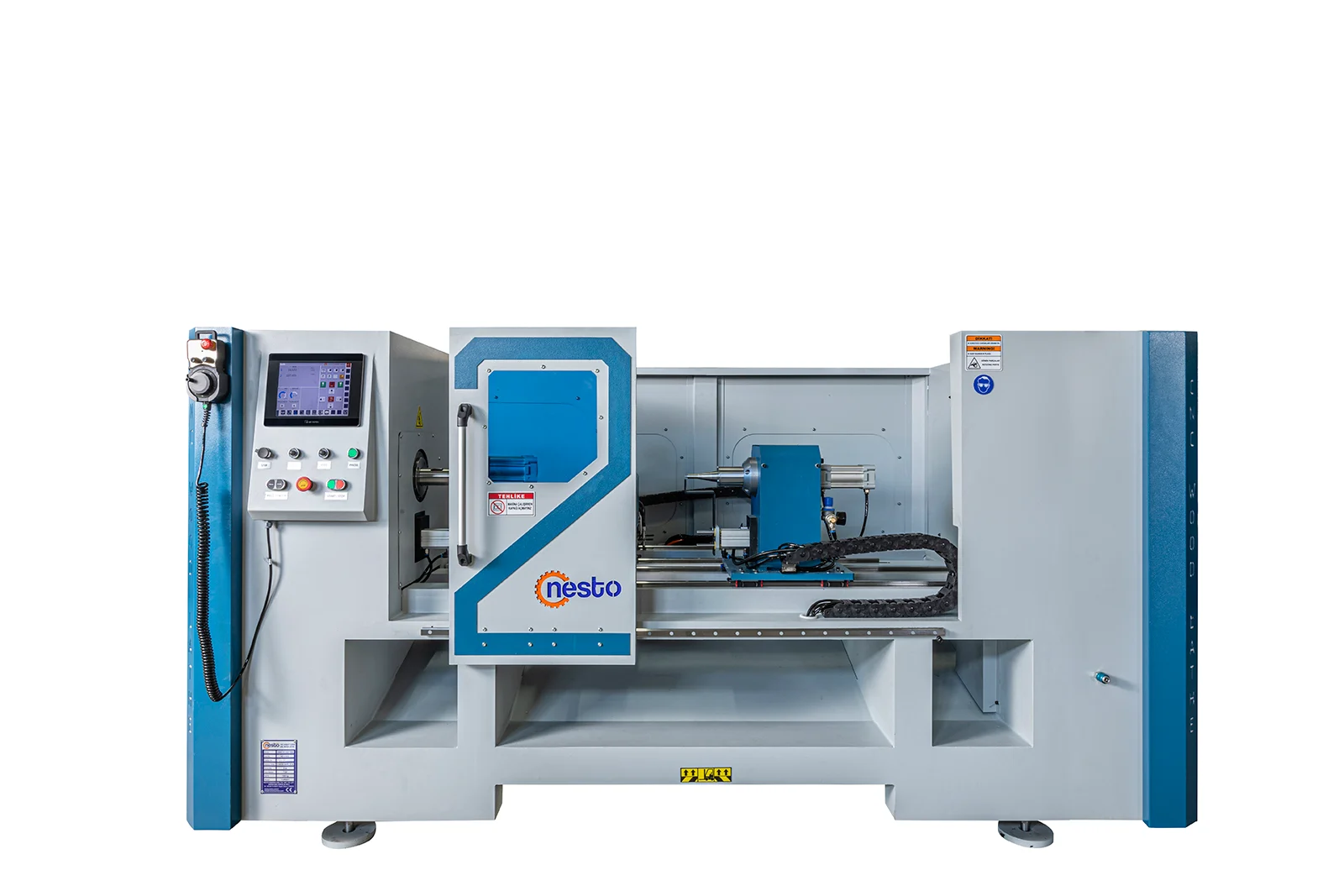
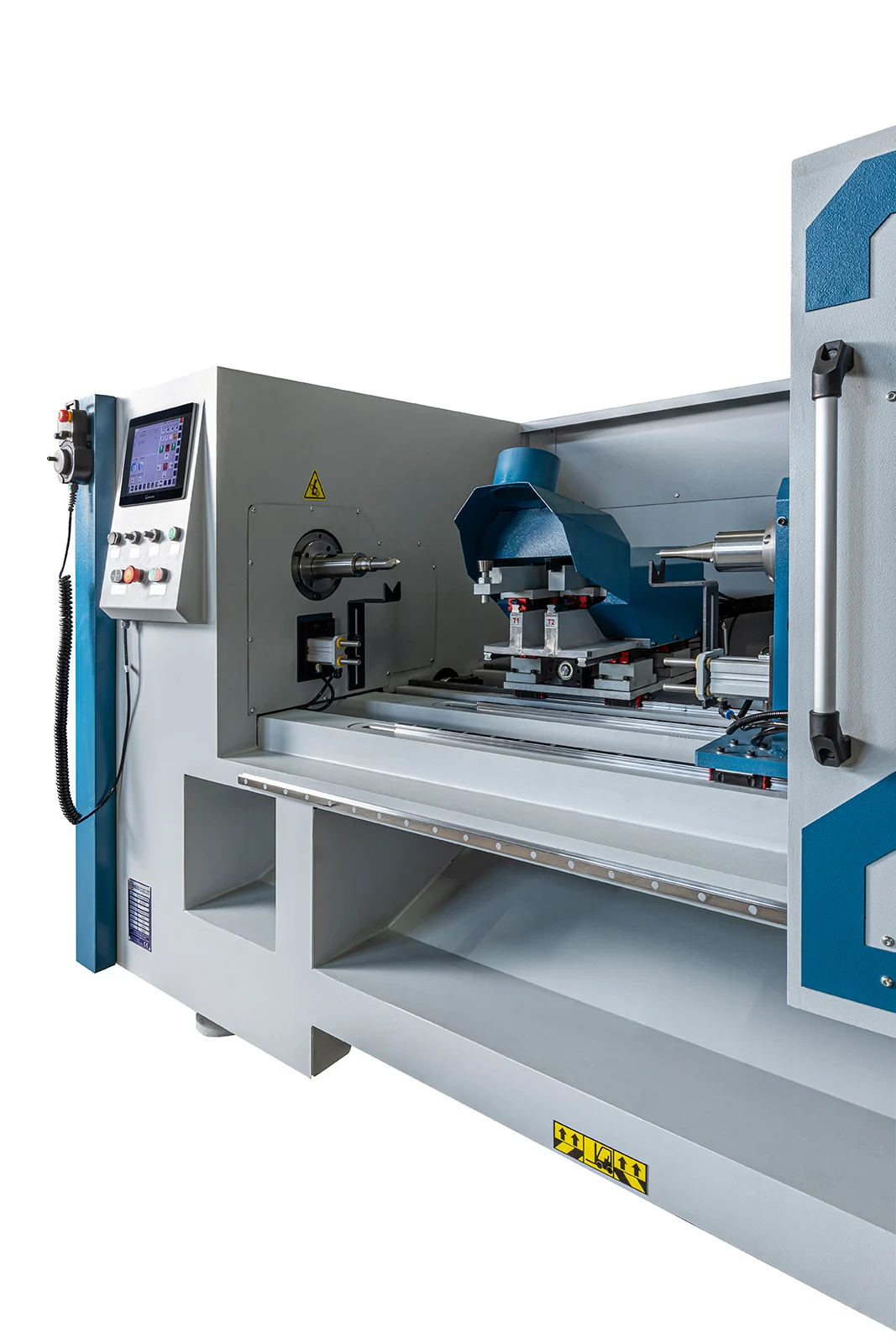
It is a very focused machine to produce a wide range of different designs, shaped furniture and joinery parts such as chair, table and sofa legs and many other types of standard or complex parts.
General Features and Production Capabilities

Repeatable two-axis turning for furniture components
The 2 Axis CNC Wood Lathe combines digital part preparation with controlled X- and Z-axis movement for repeatable production of chair, table and sofa legs, balusters and similar turned solid-wood components.

Ø280 × 1,000 mm working capacity
The standard working range accepts workpieces up to 280 mm in diameter and 1,000 mm in length. Final suitability depends on the stock geometry, wood species, tooling and required profile.
- Ø 280 mm
- 1,000 mm
- 39.37 in

Automatic twin-blade turning workflow
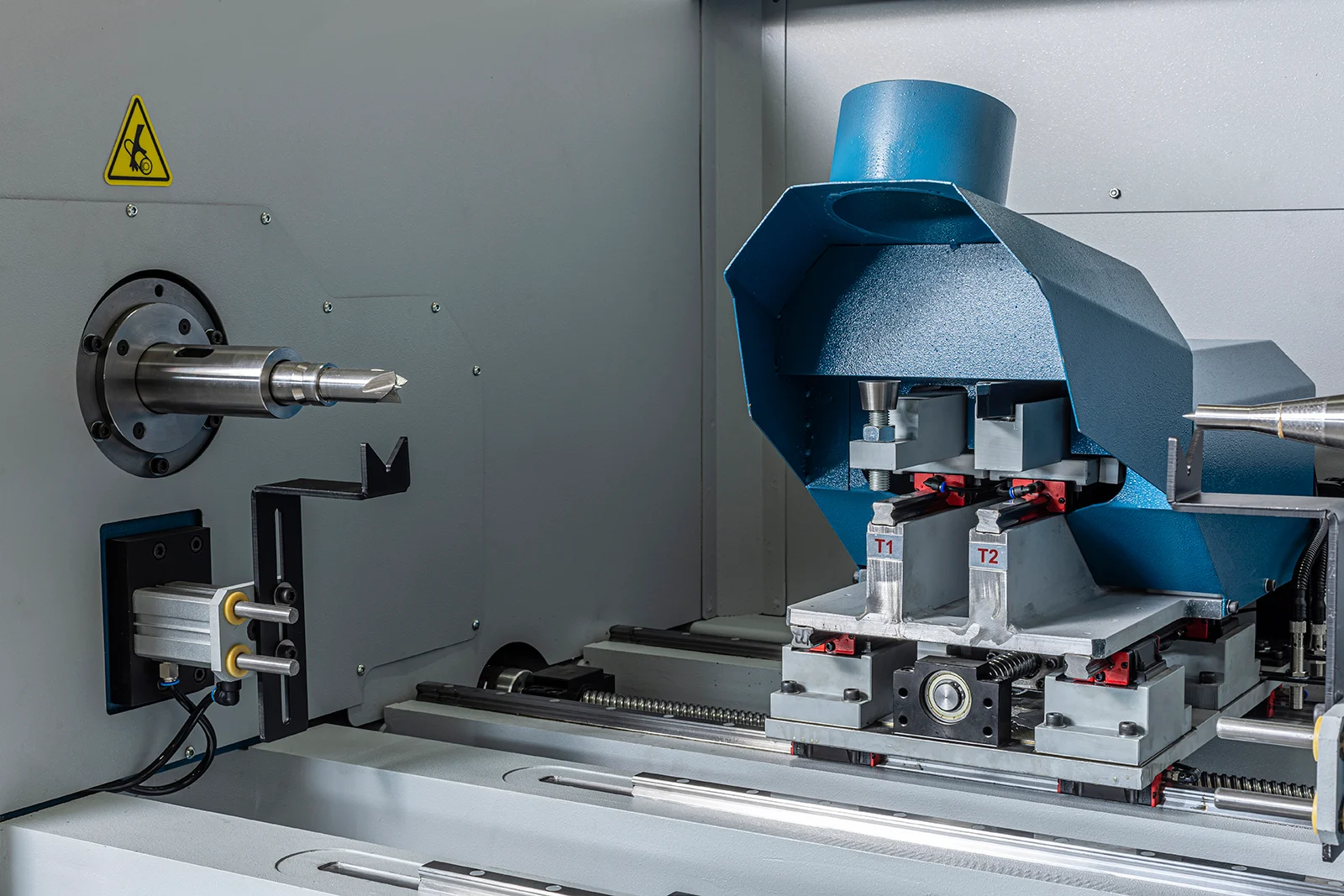
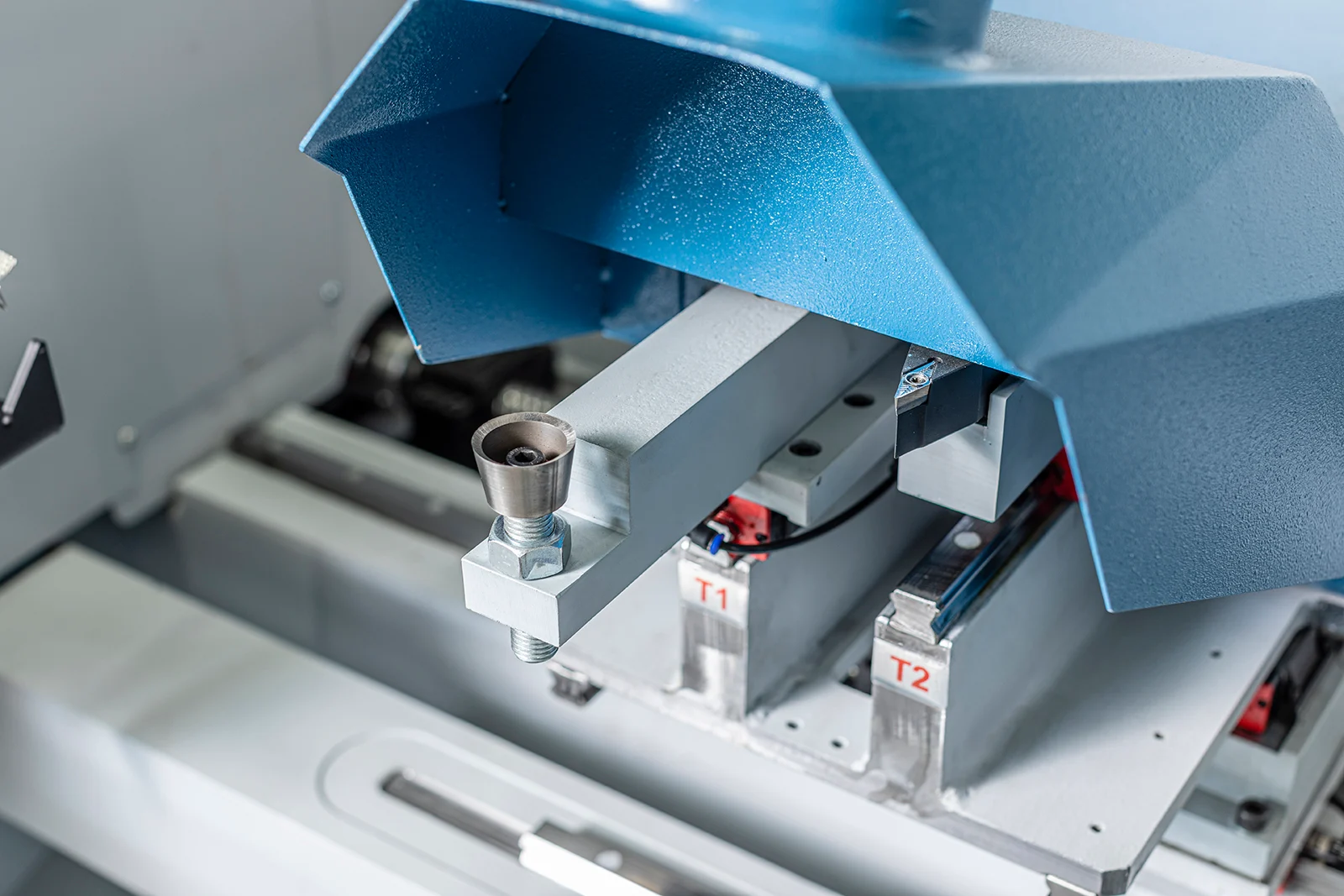
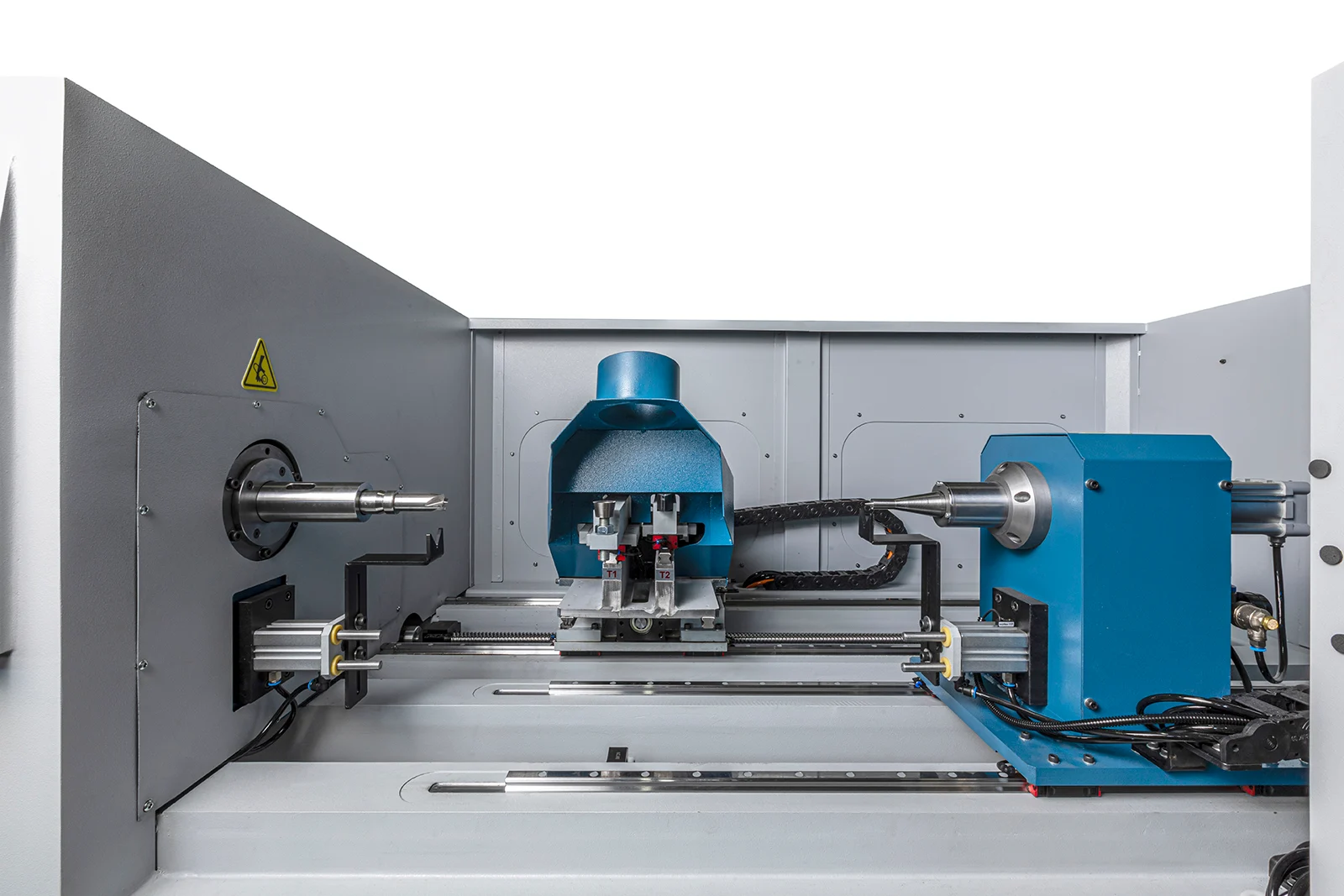
The cup blade is used for rough stock removal, while the triangular blade completes detailed profiling. The coordinated two-blade arrangement reduces manual tool handling between roughing and finishing steps.

Servo axes and precision linear motion
Panasonic servo infrastructure, precision ball screws and linear guides support controlled X- and Z-axis positioning. The reinforced chassis is designed to keep the cutting reference stable during recurring cycles.

Keyless workpiece-length adjustment
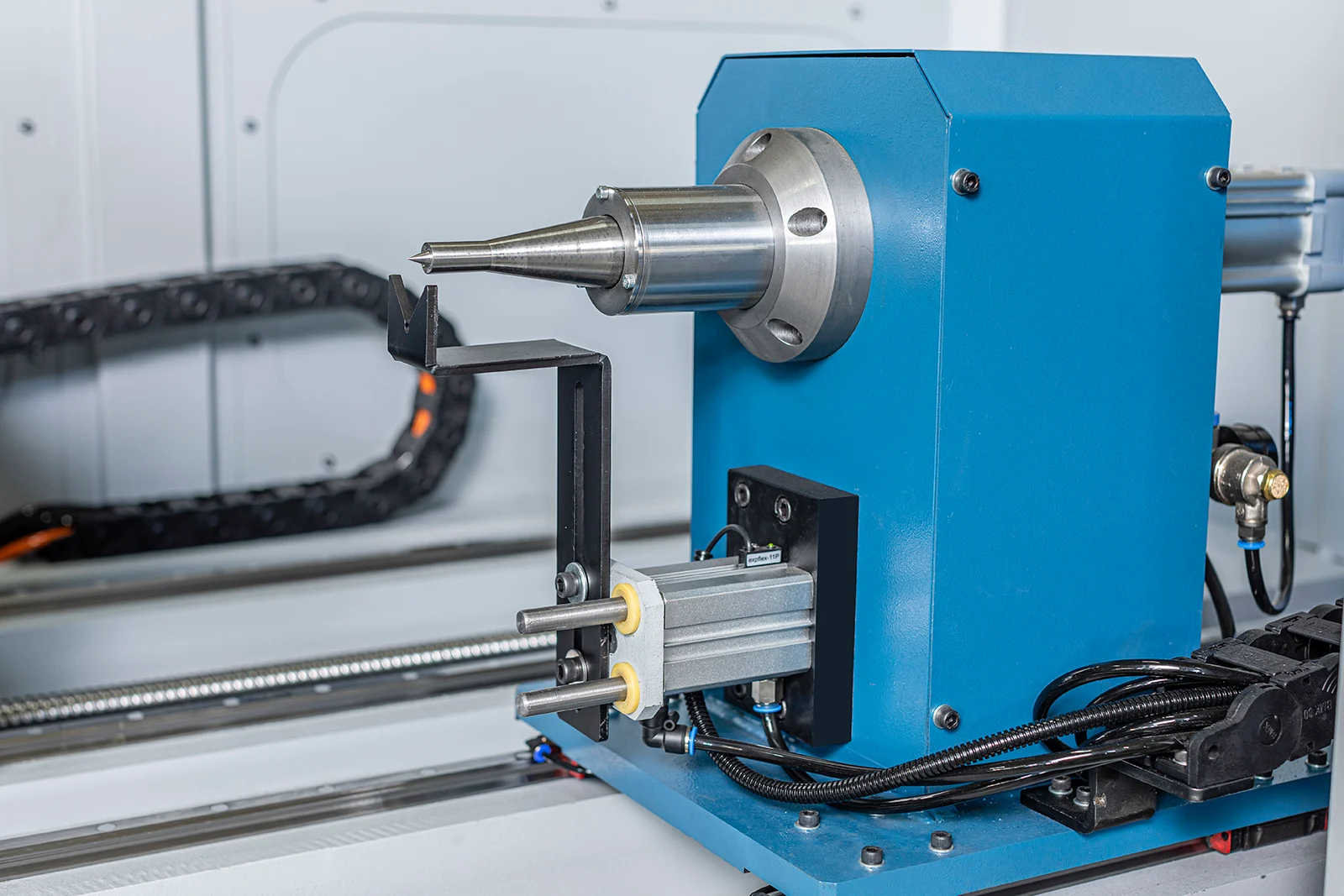
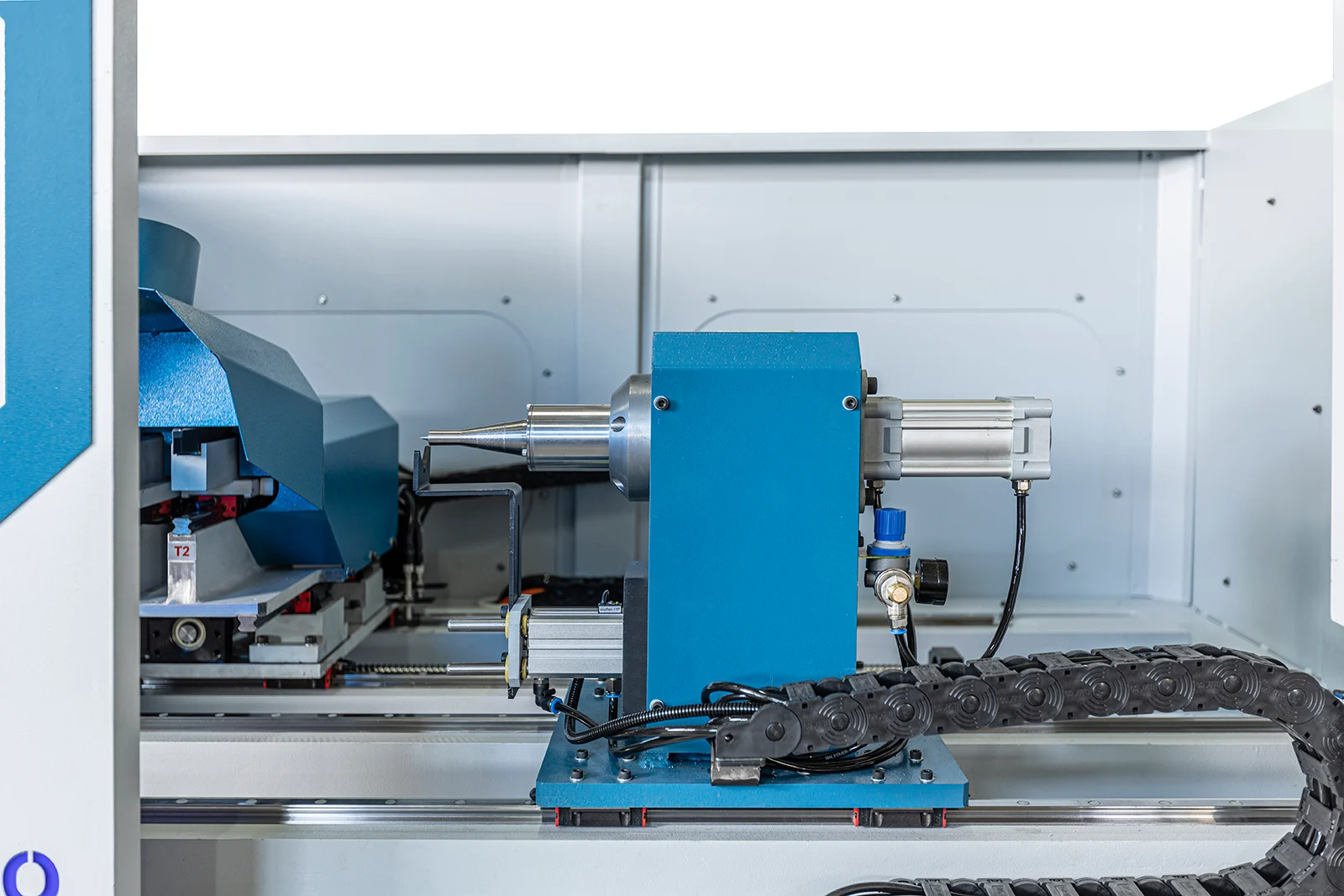
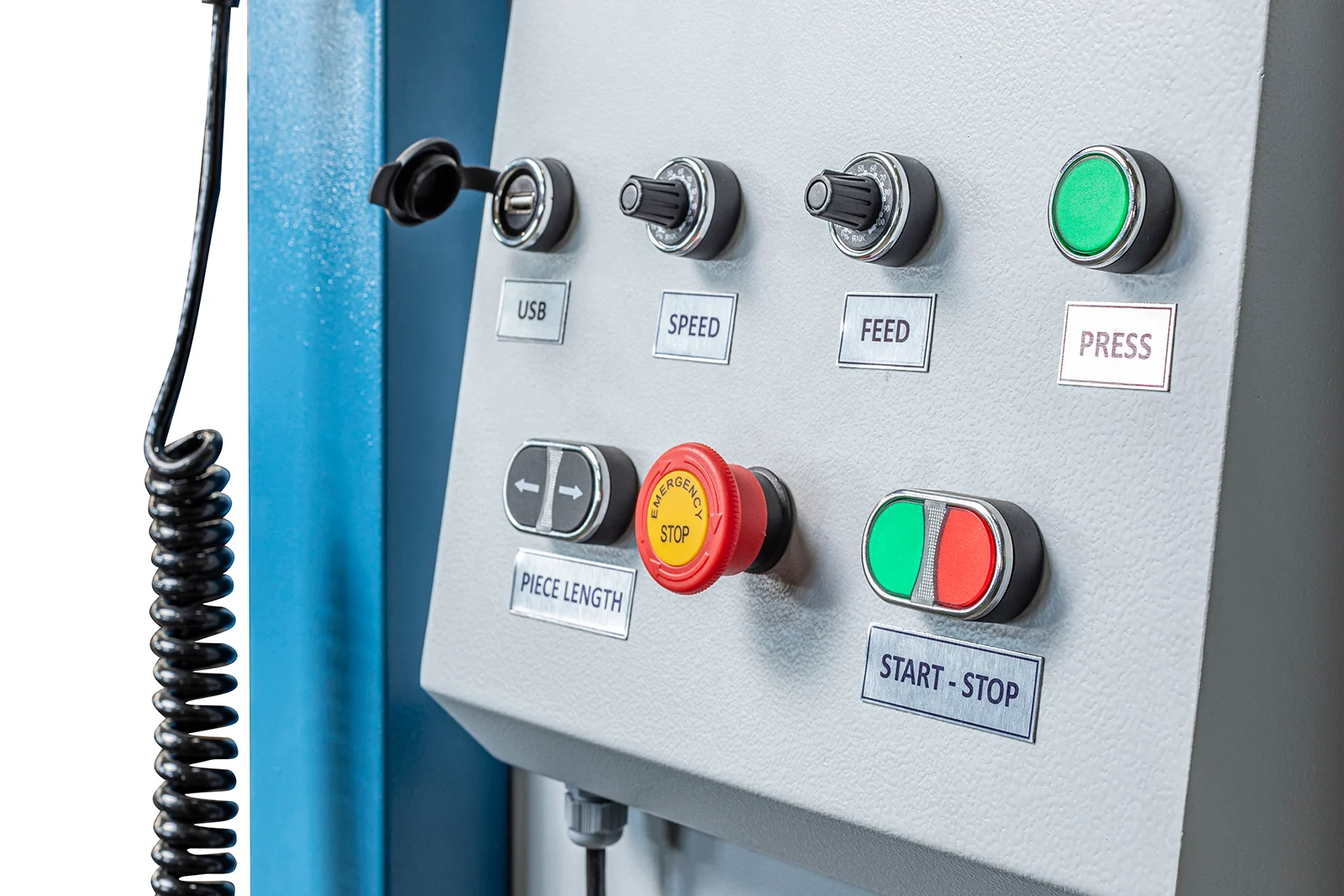
The movable tailstock is positioned from the control system without a wrench or screw adjustment. This helps shorten setup when switching between documented workpiece lengths.
Central automatic lubrication
The ILC lubrication unit distributes oil to the motion components at adjustable intervals, helping the operator maintain a consistent lubrication routine without stopping for every lubrication point.

Furniture-leg and turned-part applications
Typical applications include chair, table, sofa and armchair legs, balusters and other longitudinal solid-wood profiles that fit the specified diameter and length envelope.
Technical Specifications
| Specification | Standard machine |
|---|---|
| Maximum workpiece diameter and length | 280 × 1,000 mm11.02 × 39.37 in |
| Servo control infrastructure | Panasonic |
| Z-axis travel | 1,000 mm39.37 in |
| X-axis travel | 170 mm6.69 in |
| Z-axis rapid speed | 96 m/min |
| X-axis rapid speed | 25 m/min |
| Maximum turning speed | 6,000 rpm |
| Total installed power | 8 kW |
| Machine weight | 1,500 kg |
| Machine dimensions (L × W × H) | 2,800 × 1,280 × 1,750 mm110.24 × 50.39 × 68.90 in |
| Lubrication unit | ILC automatic lubrication |
| Workpiece clamping | Pneumatic piston · 7 bar |
| Workpiece-length adjustment | Control-panel adjustment · keyless and screwless |
| Detail cutting blade | Hardened special-steel triangular blade |
| Roughing blade | Hardened special-steel cup blade |
| Workpiece centering | Easily adjustable centering fixture |
| Drawing and production software | Pegasus 2-Axis CAD/CAM for the machine |
Standard Main Equipment

Panasonic servo axis infrastructure
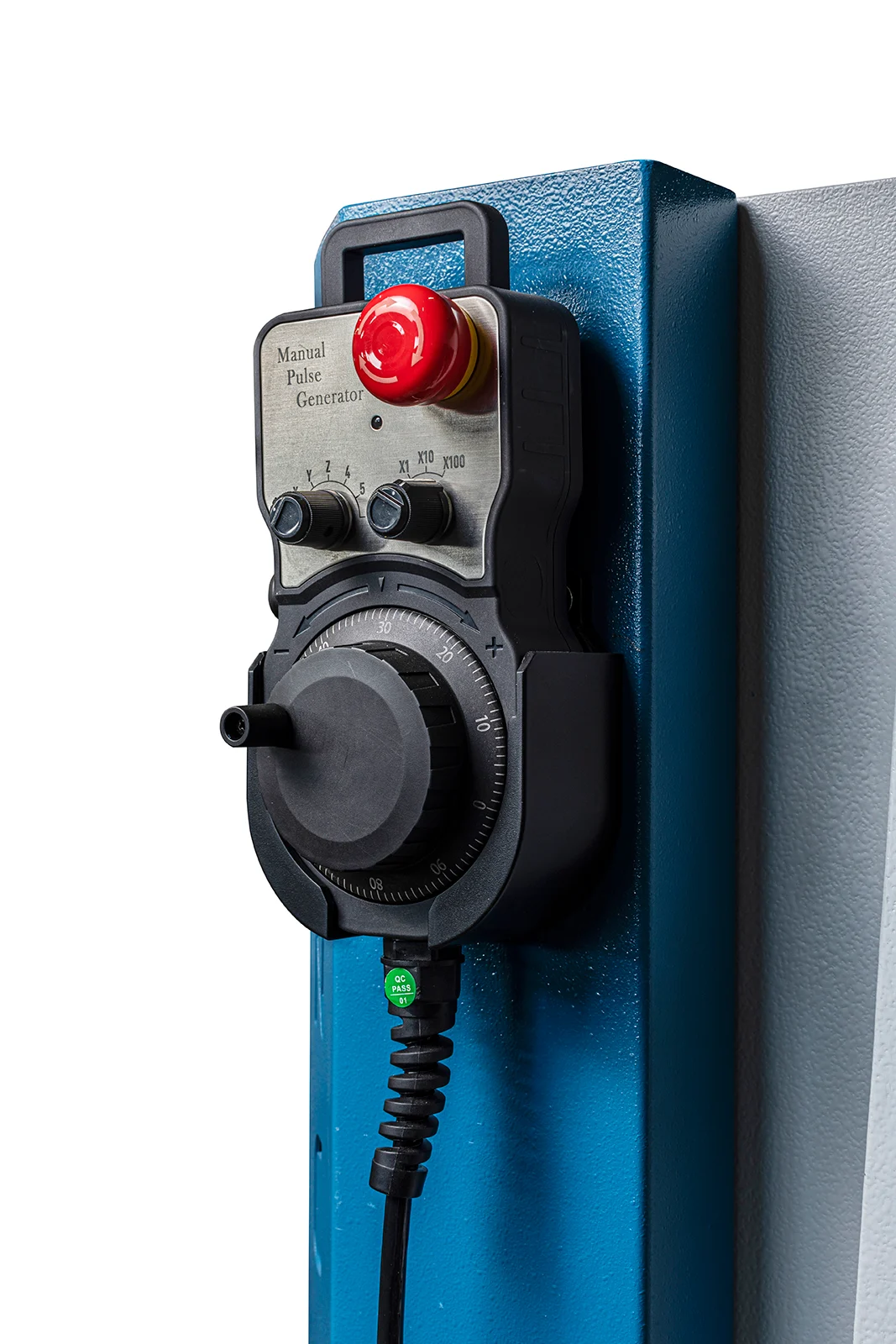
High-resolution servo motors control the X and Z axes through precision motion components for documented, repeatable profiles.

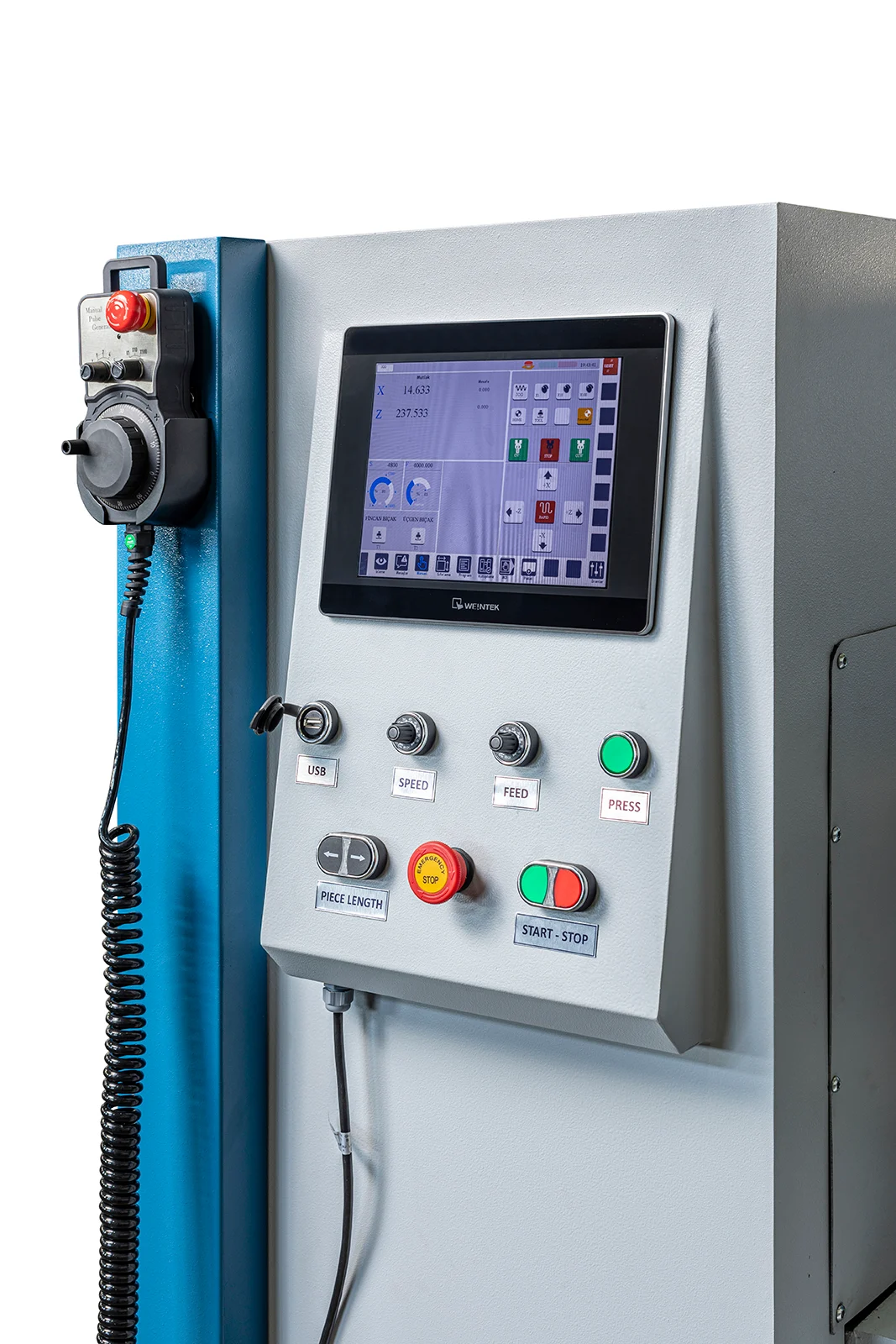
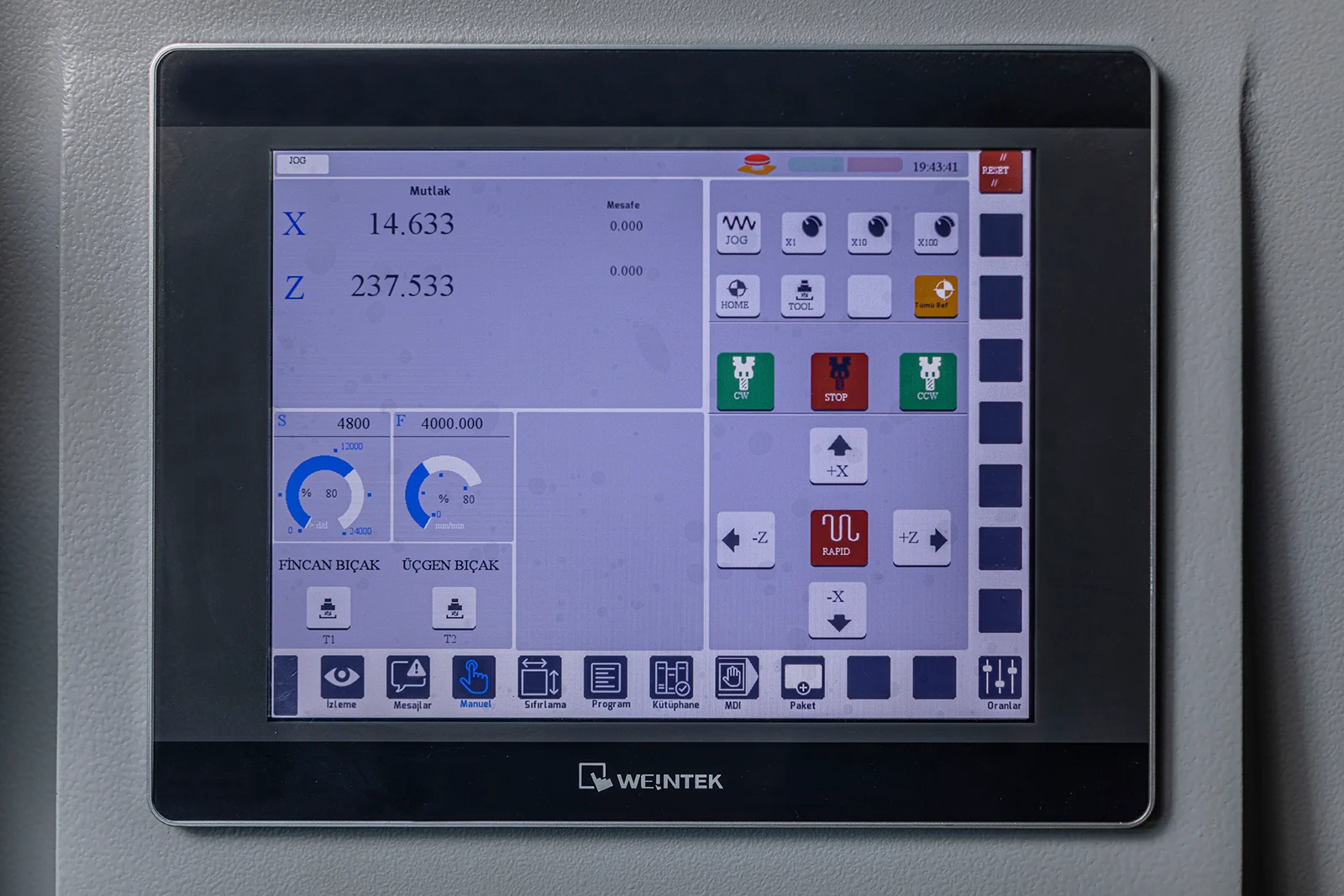
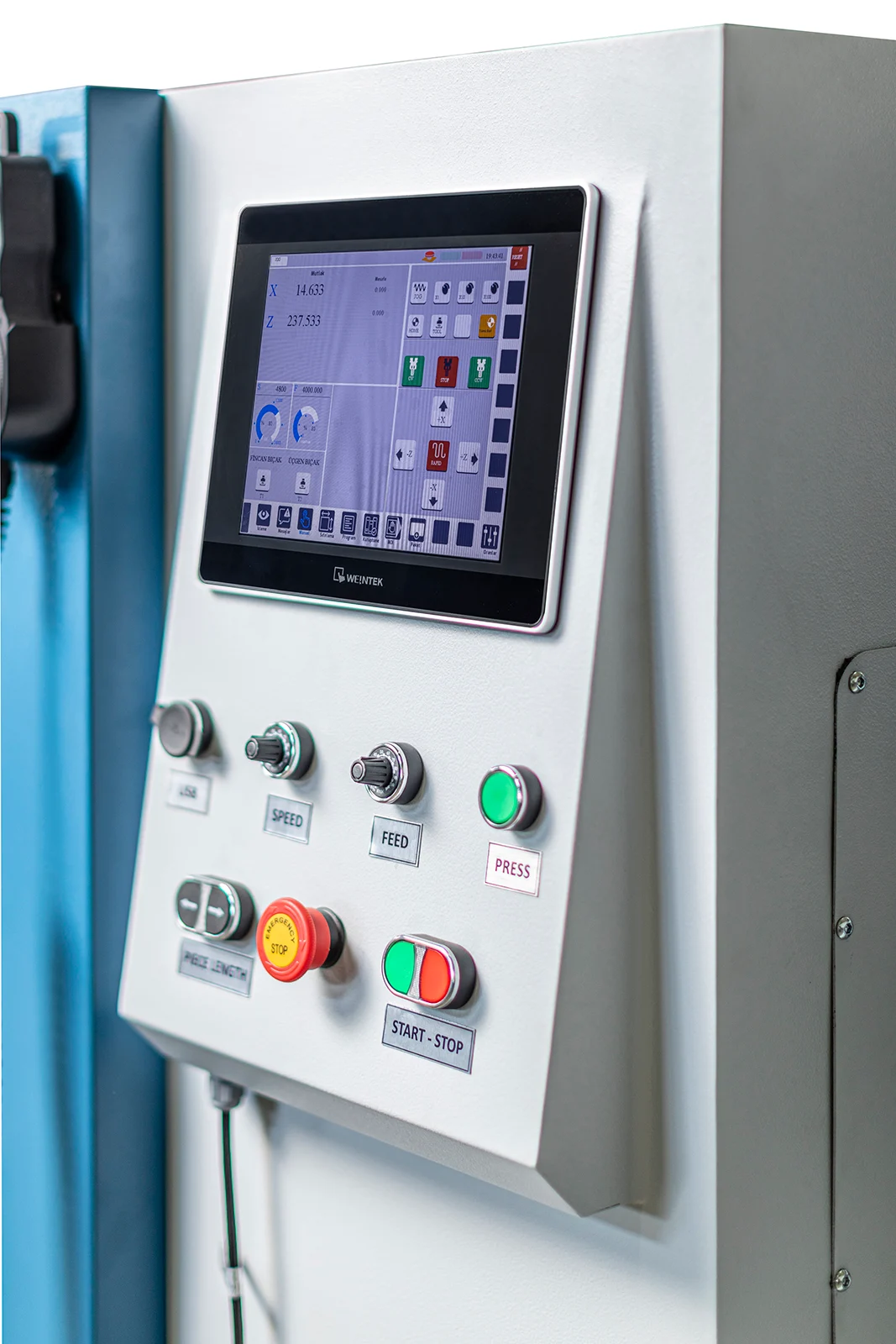
HSC RTEX touch operator interface
The industrial touch interface brings axis control, production macros and machine functions together on one operator screen. Remote support connection is available for service diagnostics.

Pegasus 2-Axis CAD/CAM workflow
The machine-specific software lets the operator prepare the profile, preview the part in 3D and generate the machining program in one digital workflow.
Cup and triangular blade unit
The hardened cup blade performs rough stock removal and the triangular blade completes the detailed profile. Both cutting tools are integrated into the standard turning unit.
Movable tailstock and length setting
The tailstock position is adjusted from the control panel, supporting faster changes between recurring workpiece lengths without manual screw setting.
Pneumatic clamping and centering
A 7 bar pneumatic piston secures the workpiece, while the adjustable centering fixture supports consistent alignment between the drive and tailstock references.
- 7 bar
ILC automatic lubrication unit
Adjustable lubrication intervals support regular distribution of oil to the motion components during routine production.
- Central system
Typical applications
- Chair legs
- Table legs
- Sofa legs
- Turned solid-wood parts
Model selection
Frequently asked questions
Which parts can the 2-Axis CNC Wood Lathe produce?
It is designed for longitudinal turned solid-wood parts such as chair, table, sofa and armchair legs, balusters and similar furniture profiles that fit the maximum Ø280 × 1,000 mm working envelope. Final suitability is checked from the part drawing, stock and required profile.
What are the maximum workpiece dimensions and turning speed?
The standard capacity is up to 280 mm in diameter and 1,000 mm in length. Maximum turning speed is 6,000 rpm. The required speed and cutting strategy depend on wood species, stock balance, diameter, profile and tooling.
How do the cup and triangular blades work together?
The hardened cup blade removes the main stock during roughing, while the hardened triangular blade completes the detailed profile. The two tools are integrated into the turning unit to reduce manual intervention between roughing and finishing.
How is workpiece length adjusted?
The movable tailstock is positioned from the control system without a wrench or manual screw adjustment. A 7 bar pneumatic piston clamps the workpiece, and the adjustable centering fixture helps align it between the drive and tailstock references.
What does Pegasus 2-Axis CAD/CAM provide?
The machine-specific Pegasus workflow lets the operator prepare the turning profile, inspect the part in 3D and generate the machining program digitally before production. This supports faster recall and more consistent repeat jobs.
What are the machine dimensions, power and weight?
The machine measures 2,800 × 1,280 × 1,750 mm (110.24 × 50.39 × 68.90 in), has 8 kW total installed power and weighs 1,500 kg (3,307 lb). The installation plan should also allow service access and material handling space.
Which part data should be shared for a production evaluation?
Share the part drawing or 3D model, wood species, raw-stock dimensions, finished profile, diameter and length, target daily quantity and surface-quality expectation. A physical sample is useful when the geometry or wood behaviour requires validation.